11 Amazing Amazon Rainforest Facts for Kids [UPDATED Facts]
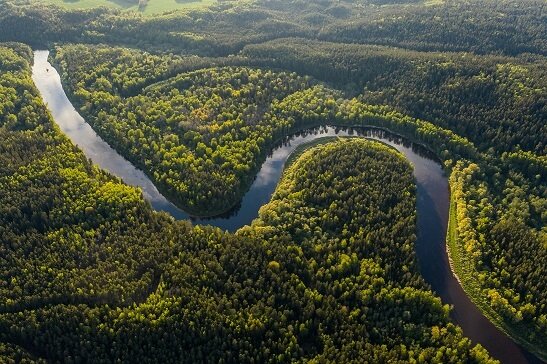 Lining up plastic jungle animals on the living room rug is just a tiny peek into the real Amazon. This giant green forest is the actual home behind so many of your child’s favorite storybooks, animal cartoons, and movies like Rio.
When curious minds ask how big a real jungle can get or where wild monkeys sleep at night, the Amazon has the most amazing answers. You can share these simple stories together at bedtime to explore the biggest forest on Earth.
11 Interesting & Fun Amazon Rainforest Facts for Kids They Will Love to Know about
When you were a kid, you probably wondered what it would feel like to walk under trees as tall as city buildings. You might have pictured colorful parrots flying overhead and giant rivers winding through the woods.
The real Amazon is even bigger and busier than most people imagine, from treetops that make their own rainclouds to a river with zero bridges.
Now let us take a look at those fun Amazon Rainforest facts!
1. It Is the Largest Tropical Rainforest on Earth
When you walk through a neighborhood park, you can usually see the street on the other side in just a few minutes. Now picture a lush wilderness so colossal that it holds over half of all the remaining tropical rainforests on planet Earth!
The Amazon Rainforest in South America is the largest tropical rainforest in the world, spanning about 2,300,000 square miles (6,000,000 square kilometers) across the mighty Amazon River basin. That equals 1.4 billion acres of dense, emerald-green jungle, making it nearly the size of the 48 contiguous United States!
While people often call it the ‘lungs of the Earth,’ its real climate superpower is acting as a giant carbon sponge, locking away up to 200 billion metric tons of carbon to help keep our global climate stable.
2. One Forest Spreads Across Eight Different Countries
Most forests fit inside a single state or county, but the Amazon is far too gigantic for any single country to hold all of it.
This colossal rainforest spreads across eight South American countries (Brazil, Peru, Colombia, Bolivia, Ecuador, Venezuela, Guyana, and Suriname) plus the overseas territory of French Guiana. While all these neighbors share the trees, Brazil holds the largest portion, containing about 60 percent of the entire rainforest!
The Amazon is also the ancestral homeland of more than 400 distinct Indigenous peoples who speak over 300 different languages, with around 100 tribes choosing to live in peaceful voluntary isolation deep within the jungle.
3. The Trees Stack Up Like a Four-Story Apartment Building
Imagine living in a giant green apartment building where different animal neighbors live on every floor! Plants and creatures divide up the Amazon into four distinct vertical layers, each with its own special climate.
At the bottom is the dark forest floor, followed by the humid understory, the crowded leafy canopy, and the sun-drenched emergent layer at the very top. The main canopy forms a thick ceiling of leaves and branches 100 to 150 feet (30 to 45 meters) above the ground, where over 70 percent of all rainforest animals live, including toucans, sloths, and acrobatic spider monkeys!
Above the canopy, gigantic emergent trees like the mighty kapok soar up to 200 feet (60 meters) tall, providing lofty perches for giant Harpy eagles.
4. The Leafy Roof Keeps Baby Trees Waiting in the Dark
If you step outside on a sunny afternoon, the world is bright and warm. Inside the deep Amazon, walking on the ground feels like someone drew all the heavy window curtains shut in the middle of the day!
The leafy canopy roof grows so tightly packed that less than 2 percent of sunlight ever trickles down to the forest floor. The canopy is so dense that when a sudden thunderstorm breaks overhead, it can take up to 10 full minutes for raindrops to filter through the thick branches and splash onto the ground below!
Young baby trees, called saplings, can sit quietly in the dim shade for years, waiting patiently for a giant elder tree to fall and create a sunny gap so they can race upward toward the sky.
5. The Trees Pump Water into the Sky to Make Their Own Rain
Most places around the world rely on distant winds and ocean storms to bring them rain. The Amazon has so many billions of lush leaves that the forest actually builds its own rainstorms right overhead!
Through a process called transpiration, a single large Amazonian tree can pump up to 1,000 liters (over 260 gallons) of water vapor into the air every single day. Across the entire basin, the trees release an astonishing 20 billion metric tons of moisture daily into the atmosphere, creating colossal aerial plumes called flying rivers!
These sky-rivers carry more water vapor than the Amazon River carries water, recycling up to 75 percent of the forest’s rain and keeping the whole continent green and fertile.
6. The Giant Amazon River Has Zero Bridges Crossing It
In most modern cities, you drive across a bridge whenever you need to cross a river. Along the entire 4,100-mile length of the Amazon River, you will not find a single bridge anywhere!
The Amazon is the largest river in the world by water volume, pouring roughly 20 percent of all freshwater river flow on Earth into the Atlantic Ocean. During the rainy season, the river rises by 30 feet and swells from 6 miles wide to over 30 miles (48 kilometers) wide, flooding thousands of square miles of forest!
Because the banks turn into wide muddy floodplains and few roads exist in the dense jungle, people travel by wooden riverboats instead, sharing the murky waterways with extraordinary creatures like pink river dolphins and shocking electric eels that can deliver an 860-volt zap!
7. One Out of Every Ten Known Species on Earth Lives Here
Think about all the colorful plants, insects, fish, and birds across our entire planet. Biologists estimate that one out of every ten known species on Earth makes its home in the Amazon Rainforest!
This incredible wilderness shelters 40,000 plant species, 3,000 freshwater fish species, and more than 1,300 species of birds. It is also home to over 2.5 million species of insects, including bright butterflies that land on sunbathing river turtles to drink their salty tears for minerals!
Hidden corners of the jungle are so remote that scientists discover a brand-new species of plant or animal here every three to four days, including tiny poison dart frogs and a monkey that purrs like a house cat!
8. Spotted Jaguars Use Dark Shadows to Sneak Up on Dinner
Hunting in a shadowy, tangled jungle takes incredible stealth and power. That is why the jaguar, the largest wild cat in the Americas, reigns supreme as the apex predator of the Amazon floor and understory!
A jaguar’s golden coat is covered in beautiful flower-shaped patterns called rosettes, which have tiny black dots in the center to help the big cat melt invisibly into dappled jungle shadows. Pound for pound, jaguars have the strongest bite of any big cat, powerful enough to pierce straight through armored turtle shells and tough reptile hides!
Jaguars love swimming in rivers to hunt fish and track the capybara, the largest rodent in the world, which can weigh up to 170 pounds (80 kilograms) and hold its breath underwater for five minutes to escape danger.
9. Colorful Macaws Live in Big Flocks and Can Copy Human Words
High in the sunny green canopy, bright parrots called macaws fill the jungle with loud squawks and flashing rainbows of color. Species like the brilliant scarlet macaw are among the smartest and most social birds on Earth!
Macaws fly through the treetops in close flocks of 10 to 30 birds, often flying wingtip-to-wingtip with their lifelong mates. Their massive, hooked beaks are so powerful they can crack open rock-hard Brazil nut pods that humans cannot open without a heavy metal saw!
Hundreds of macaws also gather each morning at steep riverbanks to eat natural clay, which provides vital minerals and neutralizes toxins from unripe seeds. In the wild, these loyal birds mate for life and can live for over 50 to 60 years!
10. Myth Busted: The Rainforest Dirt Is Actually Poor in Nutrients
When you look at millions of towering green trees, you might assume the soil beneath your boots is the richest garden dirt on Earth. Surprisingly, that common belief is a major myth!
Most rainforest soil is actually ancient, acidic, and nutrient-poor because millions of years of heavy tropical rain have washed essential minerals away. The Amazon survives through ultra-fast recycling: fallen leaves and twigs are broken down in days by fungi and hungry caterpillars, with shallow tree roots instantly soaking up the freed nutrients before the rain can wash them away!
Amazingly, NASA satellites discovered that 28 million tons of nutrient-rich dust from the Sahara Desert blow across the Atlantic Ocean every year, showering the Amazon with vital phosphorus minerals!
11. Fierce Female Warriors Inspired the Name Amazon
Have you ever wondered how a wild rainforest in South America got a name from ancient Greek mythology? The story began more than 480 years ago during an epic river voyage in 1541 to 1542!
A Spanish explorer named Francisco de Orellana became the first European to navigate the entire length of the giant river. During a fierce battle along the riverbanks, his crew fought a local tribe led by brave, skilled women warriors who fought fiercely with bows and arrows.
The battle reminded Orellana of the famous female warriors called Amazons from ancient Greek legends, so he christened the mighty waterway the Amazon River, and the surrounding green jungle has shared that legendary name ever since.
Frequently Asked Questions (FAQs)
Where is the Amazon Rainforest located?
The Amazon Rainforest is located in northern South America, sprawling across the Amazon River basin within eight countries (Brazil, Peru, Colombia, Bolivia, Ecuador, Venezuela, Guyana, and Suriname) and the territory of French Guiana.
How big is the Amazon Rainforest?
It covers approximately 2,300,000 square miles (6,000,000 square kilometers), or about 1.4 billion acres. That makes it the largest tropical rainforest in the world, covering roughly 40 percent of the South American continent.
What animals live in the Amazon Rainforest?
The Amazon is home to jaguars, scarlet macaws, spider monkeys, electric eels, pink river dolphins, capybaras, poison dart frogs, green anacondas, and over 3,000 freshwater fish species.
What are the four layers of the Amazon Rainforest?
From bottom to top, the four vertical layers are the dark forest floor, the humid understory, the crowded leafy canopy (where over 70 percent of animals live), and the sunny emergent layer with giant trees rising over 200 feet tall.
Do people live in the Amazon Rainforest?
Yes, more than 40 million people live in the Amazon basin, including over 400 distinct Indigenous ethnic groups. About 100 Indigenous tribes live in voluntary isolation, maintaining traditional forest lifestyles.
How does the Amazon Rainforest help Earth’s climate?
The Amazon acts as a critical global climate stabilizer by storing 150 billion to 200 billion metric tons of carbon and pumping 20 billion tons of water vapor into the air daily through ‘flying rivers’ that regulate rainfall patterns worldwide.
That giant green forest really is like a four-story apartment building filled with noisy macaws, sneaky jaguars, and trees tall enough to make their own rainclouds. Next time it rains outside your window, ask your kid to imagine trees pumping trillions of tons of water right back up into the sky.
That was it, folks! Hope you and your little one enjoyed these amazing facts about the Amazon Rainforest.