11 Amazing Tornado Facts for Kids [UPDATED]
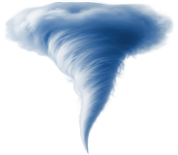 Pull the plug in a full bathtub and watch the water spin down the drain in a tight little funnel. Your kid has probably poked a finger right into the middle of that spinning water just to feel it pull.
Out in the big sky, giant storm clouds can spin the air the exact same way until a tall tube of wind reaches all the way down to the dirt.
11 Interesting & Fun Tornado Facts for Kids They Will Love to Know about
A tornado is a narrow, fast-spinning tube of air that stretches from the bottom of a thunderstorm all the way down to the ground. Even though they start inside huge clouds, tornadoes pack their power into a very small space.
Some tornadoes last only a few minutes, while others race across the land faster than a family car. From invisible winds to roaring storm clouds, learning how these twisters work makes weather science super exciting for your child.
Now let us take a look at those fun tornado facts!
1. Tornado Winds Can Spin at Up to 318 Miles Per Hour
When you ride in a car along the highway, roadside trees and signs zoom past your window pretty fast. Inside violent tornadoes, the spinning vortex moves several times faster than any freeway traffic!
Meteorologists use mobile Doppler radar trucks to measure exact wind speeds inside a swirling vortex above the ground. On May 3, 1999, near Bridge Creek and Moore, Oklahoma, researchers recorded a peak wind speed of 318 miles per hour (512 km/h), the highest wind velocity ever measured on Earth.
Winds that intense exert tremendous force, easily lifting 20-ton freight cars off train tracks and tossing them through the air like toy models!
2. The Widest Tornado Ever Recorded Stretched 2.6 Miles Across
You might imagine that every tornado needs to be gigantic to pack power, but typical tornadoes focus their force into a path about 100 yards across, roughly the length of one football field.
Occasionally, rare monster storms widen dramatically across open plains. On May 31, 2013, a colossal tornado near El Reno, Oklahoma, carved an official damage path spanning a record-breaking 2.6 miles (4.2 kilometers) wide!
If you lined up around 45 regulation football fields end to end, that is how far this single record-setting vortex spanned across the ground.
3. Giant Supercell Thunderstorms Feed Tornadoes With Warm Air
A tornado cannot pop up out of a clear blue sky on its own. It requires the immense atmospheric energy of a parent storm, most commonly a rotating powerhouse called a supercell thunderstorm.
Supercells feature a towering anvil-shaped top and a powerful rotating updraft known as a mesocyclone. When winds at different heights blow at varying speeds and directions, this rising column begins spinning, rocketing upward at speeds over 100 miles per hour and punching 50,000 feet into the sky, towering even higher than Mount Everest!
That rotating updraft serves as the supercharged engine that organizes and powers a tornado down near the surface.
4. A Spinning Cloud Is Only a Tornado When It Touches the Ground
If you spot a rotating cone-shaped cloud dangling from the base of a dark storm, you might think you are looking at a tornado right away. In meteorological terms, that airborne vortex is called a funnel cloud.
A rotating funnel only becomes an official tornado the exact moment it makes physical contact with the Earth’s surface. Surprisingly, even within severe supercell storms, only about 20 percent (roughly 1 out of 5) actually produce a tornado that reaches the ground.
Trained storm spotters look closely at the ground directly beneath a funnel for a swirling debris cloud to confirm a tornado has truly touched down.
5. Most Tornadoes Stay on the Ground for About 5 Minutes
Severe thunderstorms can rumble across your county for hours, so it is easy to assume a tornado lasts just as long. In reality, the vast majority of tornadoes touch down and dissipate within minutes.
A typical tornado remains on the ground for only about 5 minutes, although violent long-track storms can persist for over an hour. While tornadoes can strike at any hour, they occur most frequently between 3:00 PM and 9:00 PM, when daytime sunshine has warmed the atmosphere to peak instability.
Because five minutes passes quickly, official storm sirens and warnings urge families to take shelter in a safe room immediately.
6. Wind Is Invisible Until Water Droplets and Dust Fill the Funnel
When wind blows against your face, you feel the push, but you cannot see the air itself. Because air is completely invisible, a developing tornado is initially transparent as well.
You only see the dark funnel when the extreme pressure drop inside the vortex rapidly cools moist air, creating a condensation funnel of tiny water droplets, dust, and soil. In fact, a tornado can already be tearing across the turf before its cloud reaches the ground!
It works just like stirring clear liquid in a glass, where the spinning vortex only becomes visible once you sprinkle in a spoonful of cocoa powder.
7. An Approaching Tornado Sounds Like a Roaring Freight Train
Thunderstorms make plenty of noise, but a nearby tornado sounds like an overwhelming roar resembling a speeding freight train or jet engine.
That intense roar is generated by violent wind turbulence whipping against trees, buildings, and ground debris. Scientists have also discovered that tornadoes produce deep, low-frequency infrasound that human ears cannot hear, but specialized scientific sensors can detect from miles away.
If you ever hear that deafening, uninterrupted locomotive rumble during a severe storm warning, you should head to your designated storm shelter without delay.
8. About 1,200 Tornadoes Touch Down in the United States Every Year
The United States experiences about 1,200 tornadoes each year, more than any other nation on Earth. Most touch down in Tornado Alley and Dixie Alley, across central states like Texas, Oklahoma, Kansas, and Arkansas, where warm Gulf air meets cold Canadian fronts.
Peak tornado activity occurs during the stormy transition of spring and early summer, particularly from April through June. Even so, tornadoes occur on every continent except Antarctica, including frequent occurrences in Europe, Argentina, Australia, Bangladesh, and New Zealand.
Whenever humid tropical breezes collide with chilled dry air over wide, flat plains, the atmosphere brews the ideal ingredients for rotating severe storms.
9. Typical Tornadoes Travel Forward at 10 to 20 Miles Per Hour
A tornado rotates around its axis while traveling forward across the landscape, much like a spinning toy top gliding across a smooth floor. In the Northern Hemisphere, over 98 percent of tornadoes spin counterclockwise (cyclonically).
While the inner winds spin at breathtaking velocities, a typical tornado moves forward across the ground at a modest 10 to 20 miles per hour. However, some can remain nearly stationary, while fast-moving storms can race forward at speeds exceeding 60 miles per hour!
A 15-mile-per-hour pace is about as fast as an average bicycle ride, whereas a 60-mile-per-hour tornado matches cars speeding down an interstate highway.
10. Opening Your Windows During a Tornado Is a Big Myth
Years ago, people believed low air pressure inside a tornado would make a closed house explode unless you opened all the windows. Modern structural engineers and meteorologists have proven this old belief is completely false.
Houses do not explode from air pressure changes; instead, destructive damage is caused by violent winds and flying projectiles slamming into walls and roofs. Opening windows lets gale-force winds rush inside, lifting the roof from within and wasting precious seconds.
Instead of opening windows, heading underground like a burrowing prairie dog into a storm cellar, or taking shelter in a small windowless interior room on the lowest floor, keeps your family secure.
11. Scientists Rate Tornado Strength From EF0 to EF5 Using Damage Clues
Meteorologists cannot place delicate wind gauges directly in front of an oncoming funnel without them being destroyed. Instead, scientists rely on advanced Doppler radar and weather satellites in space to track storms, evaluating ground damage after the storm passes.
Since 2007, the National Weather Service has employed the Enhanced Fujita (EF) Scale, honoring tornado pioneer Dr. Theodore Fujita. Ratings span from EF0 (3-second wind gusts of 65 to 85 mph) to devastating EF5 (winds exceeding 200 mph).
Like forensic detectives analyzing clues, trained storm survey teams examine snapped trees, bent guardrails, and sheared foundations to assign each tornado its official rating.
Frequently Asked Questions (FAQs)
What is the difference between a funnel cloud and a tornado?
A funnel cloud is a spinning column of air hanging from a thunderstorm that has not reached the ground, while a tornado is in contact with the ground.
What is a tornado over water called?
A tornado that forms or moves over a lake or ocean is called a waterspout.
How long does a typical tornado last?
An average tornado stays on the ground for about 5 minutes, though some can last from just a few seconds to more than an hour.
Does a tornado have a calm eye in the middle like a hurricane?
No, a tornado does not have a big calm eye like a hurricane, and large tornadoes can actually have several smaller spinning mini-funnels called sub-vortices inside them.
Can the size of a tornado tell you how strong it is?
No, size alone cannot tell you how strong a tornado is because a narrow tornado can still cause violent EF4 or EF5 damage, while a wide tornado over a quarter-mile across can sometimes be weak.
Where is the safest place to go during a tornado?
The safest place is an underground storm shelter or basement, or a small windowless room like a bathroom or closet on the lowest floor near the center of a sturdy building.
Next time dark storm clouds roll across the sky or water spins down your bathtub drain, your kid will know the exact science behind how a tornado forms and moves. Knowing how weather scientists track storms and how to pick a safe inside room also helps kids feel calm and prepared when storm season arrives.
That was it, folks! Hope you and your little one enjoyed these amazing facts about tornadoes.