11 Amazing Antarctica Facts for Kids [UPDATED Facts]
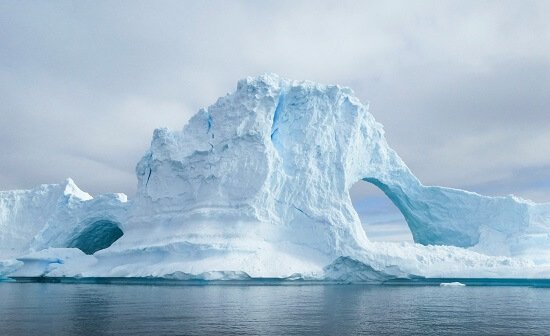 Marching around the living room like a waddling baby penguin is a classic way for kids to play pretend. When they see pictures of the giant snowy land at the bottom of the globe, it usually looks like one endless ice skating rink.
That frozen continent actually hides some huge surprises under all the ice, like a bubbling volcano and spots that get less snow than a hot sandy desert. Sharing these simple stories is a perfect way to turn bedtime questions into a cool geography adventure.
11 Interesting & Fun Antarctica Facts for Kids They Will Love to Know about
When you were a kid, you probably spun a classroom globe and wondered what it feels like to stand at the very bottom of the world. It looks like an empty white spot on a map, yet it holds most of the fresh water on our planet and feeds giant whales in the sea around it.
Even better, learning how this icy land works helps your child see how oceans, weather, and animals connect across the Earth.
Now let us take a look at those fun Antarctica facts!
1. Antarctica Is the Coldest Place on Earth
Putting on a winter coat when it snows outside feels chilly, but no place on Earth gets as cold as Antarctica. Because it sits at the very bottom of the planet and stays covered in thick white ice, it stays freezing all year long.
The average yearly temperature in the middle of the continent is minus 70 degrees Fahrenheit (minus 57 degrees Celsius). The coldest temperature ever measured on Earth happened at Vostok Station in Antarctica, where it dropped to minus 128.6 degrees Fahrenheit (minus 89.2 degrees Celsius).
Your kitchen freezer at home stays around zero degrees Fahrenheit, so the middle of Antarctica is more than 100 degrees colder than a tub of frozen ice cream.
2. It Is Larger Than Both Europe and Australia
Looking at a flat wall map can make the bottom of the world look like a narrow strip of ice. If you look at the bottom of a round globe instead, you can see that Antarctica is a massive continent surrounding the South Pole.
Antarctica is the fifth largest continent on Earth and covers about 5.5 million square miles (14.2 million square kilometers). That means it has more land area than the entire continent of Europe and is also bigger than Australia.
If you tried to walk all the way across it with a dogsled team, your trip would stretch more than 3,700 miles from one side to the other.
3. Its Giant Ice Sheet Holds Most of Earth’s Fresh Water
Nearly every bit of land in Antarctica stays buried under a giant blanket of ice, leaving only about 2 percent of the rocky ground peeking through. This huge layer of frozen water is the largest ice sheet on our planet.
The Antarctic ice sheet holds 90 percent of the world’s ice and 70 percent of all the fresh water on Earth. At its deepest spot, that solid ice is 15,670 feet (4,776 meters) thick from top to bottom.
To picture how deep that ice goes, imagine parking 400 yellow school buses bumper to bumper and standing that whole line straight up in the air.
4. The Inside of Antarctica Is Actually a Cold Desert
When your child hears the word desert, they probably picture hot sand dunes, bright sun, and prickly cactuses. Scientists actually call a place a desert whenever it gets almost no rain or falling snow all year long.
Because the air in the middle of Antarctica is too freezing cold to hold much water, it is one of the biggest cold deserts in the world. If you melted all the snow that falls there in an entire year, it would only make 1 to 2 inches (2.5 to 5 centimeters) of water.
That whole year of melted snow would barely be as tall as a single plastic toy brick sitting in the bottom of a drinking cup.
5. One Day and One Night Each Last Six Months at the South Pole
In your neighborhood, the sun rises every morning and sets every evening to make a normal 24-hour day. Because the South Pole sits at the very bottom tip of Earth’s tilt, Antarctica does not have regular 24-hour days and nights there.
Instead, the South Pole gets one long summer “day” that lasts for six months when the sun never sets below the horizon. Then, from March 22 until September 21, the South Pole has its winter “night” and stays dark for six months in a row.
Imagine going outside to play at midnight with the sun still shining in summer, or eating breakfast, lunch, and dinner in the dark all winter long!
6. Fierce Winds Can Cause a Blizzard Without Any Falling Snow
Staying warm in Antarctica is hard enough in still air, but the wind makes the coast feel much colder. Cold, heavy air up on the high ice hills rolls rapidly down the steep slopes toward the ocean, creating powerful winds called katabatic winds.
When these sudden winds speed up, they scoop loose snow right off the ground and whip it high into the air. This creates a blinding snow blizzard on the ground even when the sky above is completely clear and zero new snow is falling.
Along the coast, huge wind gusts have reached 140 to 155 miles per hour, which is more than twice as fast as a family car driving on the highway.
7. An Active Volcano With a Boiling Lava Lake Sits in the Ice
Fire and ice sound like complete opposites that could never share the same home. Yet right off the coast of Antarctica on Ross Island sits Mount Erebus, the southernmost active volcano on Earth.
Mount Erebus rises 12,448 feet (3,794 meters) high and is covered in glaciers and snow on the outside. Inside the crater at the very top sits a bubbling lava lake filled with melted liquid rock that has stayed hot since at least 1972.
While the water all around the mountain stays frozen solid, the rock inside the top of the volcano stays so hot that it glows and puffs out steam.
8. Tiny Shrimp-Like Krill Feed the Giant Ocean Animals
The frozen land of Antarctica is so harsh that the only full-time land animals are tiny bug-like creatures called arthropods. Once you look inside the Southern Ocean around the coast, the icy water is packed with whales, seals, fish, and about 45 kinds of birds.
Almost all of these big ocean animals depend on Antarctic krill, which are small shrimp-like creatures that eat tiny ocean plants called algae. Krill swim up toward the top of the water at night and dive deeper during the day in giant groups called swarms.
Even though one krill is only about the size of your kid’s pinky finger, huge swarms of them feed the penguins, seals, and whales living around Antarctica.
9. Nobody Lives There Forever, Only Visiting Scientists
Every other continent on Earth has towns, schools, grocery stores, and families who live there their whole lives. Antarctica is the only continent with no permanent human population and no native countries.
Instead, hundreds of researchers travel to science stations on the continent every year to study the ice, weather, space rocks, and wildlife. In 1959, countries around the world signed the Antarctic Treaty, an agreement that keeps the whole continent peaceful and dedicated to science.
You can think of the whole continent as one giant outdoor science lab where countries share discoveries instead of building cities.
10. Polar Bears and Penguins Never Meet in the Wild
Cartoons, storybooks, and winter holiday cards love to show fluffy white polar bears sliding on the ice right next to penguins. That cute picture is actually a popular animal myth because those two animals live on opposite ends of the Earth.
Wild polar bears live only in the Arctic around the North Pole, while emperor, Adélie, gentoo, and chinstrap penguins live down south in Antarctica. A penguin in Antarctica never has to worry about a polar bear sneaking up on its nest on the ice.
The only way your child will ever see a polar bear and a penguin in the same place is at a city zoo or inside a cartoon movie!
11. Its Name Literally Means “Opposite to the Arctic”
If you have ever wondered why the words Arctic and Antarctica sound almost the same, the secret hides right inside the name. The Arctic is the cold region around the North Pole at the top of the world, and Antarctica sits at the South Pole at the bottom.
The name Antarctica literally means “opposite to the Arctic”. They are also opposites in how they are built, because the North Pole is mostly frozen ocean water while Antarctica is solid land covered in thick ice.
If you hold a basketball with one hand on the very top and your other hand on the very bottom, your hands show how the Arctic and Antarctica sit on opposite sides of Earth.
Frequently Asked Questions (FAQs)
1. Do any people live in Antarctica all year long?
Antarctica has no permanent residents or towns, though hundreds of scientists visit and stay at research stations to run experiments.
2. Do polar bears live in Antarctica?
No, polar bears live only in the northern Arctic region, while penguins live in the southern region around Antarctica.
3. What kinds of penguins live in Antarctica?
Emperor penguins and Adélie penguins live in large numbers all around the coast, while gentoo and chinstrap penguins live along the Antarctic Peninsula and nearby islands.
4. Who was the first person to reach the South Pole?
Norwegian explorer Roald Amundsen became the first person to reach the South Pole on December 14, 1911.
5. How cold does it get in Antarctica?
The interior averages minus 70 degrees Fahrenheit (minus 57 degrees Celsius), and the coldest recorded temperature reached minus 128.6 degrees Fahrenheit (minus 89.2 degrees Celsius).
6. How big is Antarctica compared to other continents?
Antarctica is the fifth largest continent at about 5.5 million square miles (14.2 million square kilometers), making it bigger than both Europe and Australia.
Antarctica may look like a quiet blanket of white snow on your globe, but it is really a giant cold desert with roaring winds, an active lava lake, and oceans full of penguins and whales. Next time your kid spots a penguin in a storybook, ask them if they remember why a polar bear will never show up on the same iceberg.
That was it, folks! Hope you and your little one enjoyed these amazing facts about Antarctica.