11 Surprising Bat Facts for Kids [UPDATED]
 Step outside into your backyard right after sunset, and you might spot a small dark shadow zig-zagging across the evening sky. At first glance, your kid might point up and think it is just a fast little bird chasing bugs before bedtime.
That quick nighttime flyer is actually a warm-blooded mammal covered in soft fur, much more like a family puppy than a bird. While the rest of your neighborhood goes to sleep, bats wake up to perform some of the coolest tricks in nature.
11 Interesting & Fun Bat Facts for Kids They Will Love to Know about
Most kids only see bats on Halloween decorations, which can make them seem a little spooky at first. Once you look closer, you find out that real bats are shy, gentle helpers that try to stay away from people.
From hanging upside down by their toes to finding dinner in the dark with sound echoes, these night flyers are full of surprises for curious kids.
Now let us take a look at those fun bat facts!
1. Bats Are the Only Mammals That Can Truly Fly
Lots of furry animals can leap between tree branches, and flying squirrels can glide through the air for short distances like paper airplanes. But gliding only lets an animal drift downward toward the ground, not flap upward into the clouds.
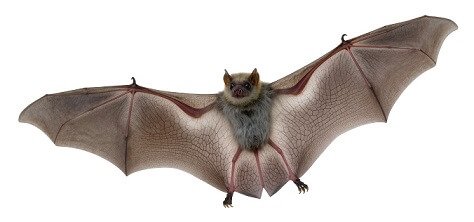
Bats are the only mammals that can truly fly under their own powered flapping flight! Instead of feathers like a bird, a bat has soft fur on its body, powerful chest and back muscles, and flexible hand-wings covered by an elastic skin membrane called a patagium.
Depending on the species, these furry acrobats can move surprisingly fast. While a diving peregrine falcon uses gravity to plunge downward, scientists at the Max Planck Institute discovered that the Mexican free-tailed bat is the fastest animal on Earth in level horizontal flight, zooming forward at over 100 miles per hour (160 km/h) without any gravity assist!
2. A Bat’s Wings Are Actually Giant Hands
Hold your hand up in front of your face and spread your fingers as wide apart as you can. When you look closely at a bat’s wing, you are looking at the exact same skeletal framework as a human hand and arm!
Scientists place bats in the animal order Chiroptera, a scientific name taken from ancient Greek words meaning “hand-wing”. The bones in a bat’s wing are super-elongated fingers covered by a thin, elastic double membrane called the patagium, which stretches all the way down to its ankles.
Because each wing contains more than two dozen independent joints, bats have incredible flight agility: they can twist their flexible fingers to change wing curvature mid-flap and pull off lightning-fast 180-degree turns within half their own wingspan! At the top edge of each wing, a small clawed thumb sticks out so the bat can groom its fur, grasp tree bark, and climb rock walls.
3. The Smallest Bat Weighs Less Than a Penny
Bats make up more than 1,460 different species worldwide, representing an incredible one out of every five mammal species on our planet! They come in an astonishing range of sizes, from thumbnail-sized flyers to giant fruit-eaters.
The tiniest bat on Earth is the Kitti’s hog-nosed bat (affectionately nicknamed the bumblebee bat) discovered in limestone caves along rivers in Thailand and Myanmar. Measuring just over 1 inch (29 to 33 mm) long, it holds the record as the world’s smallest mammal by body length and weighs only 2 grams, which is noticeably lighter than a standard one-cent penny in your pocket!
At the opposite end of the scale are giant fruit-eating bats known as flying foxes. The giant golden-crowned flying fox has a magnificent wingspan that stretches up to 5.5 to 6 feet across, which is as wide as a tall adult lying flat with arms outstretched!
4. One Bat Can Eat Thousands of Bugs in a Single Night
Pesky beetles, mosquitoes, and nocturnal moths love to swarm around backyards and farms after dusk. Luckily for farmers, about 70 percent of all bat species are dedicated insect hunters that keep night-flying insect populations in balance.
A single little brown bat can snatch up to 1,000 mosquito-sized insects in just one hour, adding up to more than 3,000 to 4,000 bugs in a single night! Nursing mother bats burn so much energy flying that they regularly devour up to their entire body weight in insects before dawn.
Imagine eating a tower of sandwiches as heavy as your entire body every single evening! By eating millions of crop-destroying beetles and caterpillars, bats act as natural pest controllers, saving farmers billions of dollars every year in avoided crop damage.
5. Bats Use High-Pitched Sound Echoes to Find Food in the Dark
Chasing a tiny flying bug through a pitch-black forest full of tangled branches sounds impossible without a flashlight. To navigate and hunt in total darkness, insect-eating bats use biological sonar called echolocation.
While zipping through the air, a bat emits rapid pulses of ultrasonic clicks through its mouth or specialized nose-leaves. These calls vibrate at ultra-high frequencies (from 20,000 up to 150,000 hertz), which are far above the limits of human hearing but can be louder than a roaring smoke detector right beside the bat’s head! Special ear muscles instantly relax after each pulse to catch the tiny, returning echoes.
By analyzing how fast the echo bounces back and how its pitch shifts, the bat’s brain creates a high-definition 3D acoustic map of its surroundings. In mid-flight, a bat can instantly pinpoint the size, speed, flight path, and surface texture of an object, easily detecting a strand of thread thinner than a single human hair!
6. Bats Are Not Actually Blind at All
You have probably heard people say someone is “blind as a bat” when searching for lost keys or glasses. Because bats hunt at night using sound echoes, many people mistakenly believe that their eyes do not function.
That famous old idiom is completely untrue: not a single species of bat is blind! In fact, all bats have working eyes, and many species possess eyesight that functions remarkably well in dim conditions that seem pitch-black to humans.
Tiny insect-eating bats use their eyes alongside echolocation to navigate across broad landscapes, spot distant landmarks, and detect twilight horizons. Meanwhile, large fruit bats (megabats) do not use echolocation at all: they have large, forward-facing eyes with specialized light-reflecting layers that grant them stellar night vision and color perception, helping them spot juicy blossoms and ripe fruit from high up in the forest canopy.
7. Bats Sleep Hanging Upside Down So They Can Drop Straight Into Flight
While your family sleeps in cozy beds at night, bats are nocturnal creatures that rest during the day. When dawn arrives, they wrap their leathery wings around their bodies like cozy blankets and hang upside down by their feet from cave ceilings, rafters, or tree branches.
Bats hang upside down because their lightweight leg bones and pelvic girdles are evolved specifically for flight rather than standing upright or running. Unlike birds that can leap into the air from flat ground, most bats cannot launch themselves from a standstill. By roosting upside down up high, a bat merely has to open its wings, let go with its toes, and let gravity drop it straight into instantaneous flight!
Even more amazing is how their feet work: bats have a specialized tendon-locking mechanism in their claws. When a bat hangs, its own body weight pulls the foot tendons tight, mechanically clamping the claws shut around the perch with zero muscle effort! This means a bat can sleep deeply, hibernate through winter, and stay locked to the ceiling without getting tired at all.
8. Baby Bats Are Called Pups and Drink Milk Just Like Puppies
Because bats are warm-blooded mammals rather than birds, they do not build nests or lay eggs. While unusual mammals like the duck-billed platypus lay eggs, mother bats give birth to live babies, usually welcoming just one pup per year!
At birth, a newborn pup is surprisingly huge: it can weigh up to one-third or more of its mother’s entire body weight! That would be equivalent to a human mother giving birth to a baby as heavy as a first-grade child.
Because a newborn pup cannot fly yet, it is born with fully formed milk teeth and powerful curved claws that let it cling firmly to its mother’s fur or latch onto the cave ceiling while mom hunts. Bat pups nurse on their mother’s milk from specialized mammary glands located under the mother’s wings, growing rapidly until they learn to fly on their own in just three to six weeks!
9. One Cave in Texas Is Home to Over 15 Million Bats
Many bat species are highly social creatures that love company. They roost together in giant communities called colonies, where sharing body warmth protects tiny babies from chilling drafts and predators like owls and snakes.
The largest known congregation of mammals on the planet lives inside Bracken Cave in Texas. Every summer, more than 15 to 20 million Mexican free-tailed bats migrate to this single limestone cave to establish a massive maternity nursery!
The bats pack together so tightly that scientists have counted up to 500 bats per square foot of cave wall. All those millions of tiny bodies generate so much collective heat that the cave interior stays above 100 degrees Fahrenheit (38 degrees Celsius), acting like a giant natural incubator that keeps baby pups warm while their mothers fly out to hunt. When the colony emerges from the cave mouth at sunset, the fluttering cloud of bats is so vast it appears as a giant green storm on local weather radar!
10. Bats Live Almost Everywhere on Earth and Even Sleep Inside Leaves and Pitcher Plants
You do not have to explore deep, dark mountain caves to find bats: these adaptable flyers thrive on every continent across Earth, except Antarctica and the most extreme polar ice caps!
While many bats roost inside caves, hollow tree trunks, rock crevices, and under bridges, tropical species have evolved delightfully clever roosting habits. The tiny Honduran white bat chews the veins of large jungle leaves to fold them down into waterproof green camping tents! In Borneo, woolly bats sleep snug inside carnivorous pitcher plants, which protect the sleeping bats in exchange for nutrient-rich fertilizer. Other species possess suction cups on their wrists to grip slick banana leaves.
Families can even install a wooden bat house on a tall sunny post or exterior wall to welcome local insect-eaters. A single well-placed backyard bat house can provide a safe haven for 100 to 150 bats, giving your garden natural bug patrol every evening.
11. Bats Are Nighttime Gardeners That Help Grow Bananas, Mangoes, and Chocolate
Bees and colorful butterflies get plenty of credit for pollinating garden blossoms during the sunny daytime. But once darkness falls, nectar-eating and fruit-eating bats take over the night shift as indispensable ecological gardeners!
Hovering like furry hummingbirds before night-blooming flowers, long-tongued nectar bats drink sweet nectar while collecting pollen all over their faces and chests. Bats pollinate more than 500 species of flowering plants, including wild bananas, juicy mangoes, avocados, and giant desert saguaro cacti that bloom only after sundown.
Fruit bats also act as nature’s reforestation champions. As they eat wild fruits, they carry seeds across long distances and drop them in their fertilizer-rich droppings, replanting tropical forests after storms or fires. Bats also protect and pollinate crops like figs, cashews, and wild cacao plants, the essential source of sweet, delicious chocolate!
Frequently Asked Questions (FAQs)
What do bats like to eat?
Around 70 percent of bat species are insect-eaters that dine on beetles, moths, and mosquitoes. Other species feed on sweet flower nectar and wild fruits, while a few specialized bats catch fish and frogs, and three rare tropical species feed on animal blood.
What is a baby bat called?
A baby bat is called a pup. Mother bats typically give birth to just one pup each year, nursing it with rich milk until it is strong enough to fly on its own within three to six weeks.
Where do bats live in the wild?
Bats live on every continent except Antarctica. They roost during daylight hours inside caves, hollow trees, rock crevices, under bridges, inside custom leaf tents, and in specialized backyard bat houses.
How big and heavy can a bat get?
Bats range from the miniature bumblebee bat, which measures about 1 inch long and weighs just 2 grams (lighter than a penny), up to giant flying foxes that have wingspans stretching nearly 6 feet across and weigh up to 3 pounds.
How fast can a bat fly?
Most insect-hunting bats cruise at speeds of 15 to 30 miles per hour, but the Mexican free-tailed bat can reach record-shattering horizontal flight speeds of over 100 miles per hour (160 km/h)!
How long do bats live in the wild?
Unlike mice and other small mammals that live only 1 or 2 years, many bats regularly live for 15 to 30 years in the wild, with one Siberian Brandt’s bat documented living over 40 years!
Next time you and your kid step outside at dusk and spot a quick shadow fluttering overhead, you can wave hello to one of nature’s hardest-working nighttime helpers. Whether they are clearing the yard of thousands of mosquitoes or helping grow your favorite fruits, bats make the world a much better place every single night.
That was it, folks! Hope you and your little one enjoyed these amazing facts about bats.