11 Surprising Frog Facts for Kids [Must Check #5]
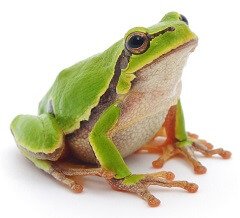 A loud “croak” echoes from a backyard puddle after a warm rain, and suddenly a tiny green jumper leaps right across the grass in front of you and your kid. That little puddle jumper looks simple on the outside, but it has some of the wildest survival tricks in the animal world.
Some frogs can glide from tree to tree, while others can freeze solid in winter ice and hop away when spring arrives. Sharing these cool frog secrets with your child will turn your next walk near a pond into a fun outdoor game.
11 Interesting & Fun Frog Facts for Kids They Will Love to Know about
Frogs belong to a special group of animals called amphibians, which also includes salamanders, axolotls, and caecilians. That name means they can live both in fresh water and on dry land.
Scientists have identified over 7,600 different kinds of frogs around the world, and each one has clever body parts made for jumping, climbing, burrowing, or swimming.
Now let us take a look at those fun frog facts!
1. Flying Frogs Can Glide the Length of a School Bus
Birds and bugs have wings to fly through the treetops, while frogs only have four legs. Still, some tree-living frogs have a special way to soar through the air when they leap from high branches.
These high jumpers are called flying frogs, and they have extra-wide skin webbing stretched between their fingers and toes. When a flying frog leaps off a tall branch, it spreads its webbed feet wide so they catch the air like tiny parachutes.
That parachute trick lets a flying frog glide 40 to 50 feet (12 to 15 meters) through the air in a single trip. Wallace’s flying frogs can even steer in midair by angling their webbed feet, gliding the length of a whole school bus from tree to tree!
2. The Biggest Frog in the World Is Longer Than a School Ruler
Most frogs you spot near a neighborhood pond are small enough to sit inside a teacup. In the rivers and rainforests of West Africa, however, one giant frog grows bigger than a dinner plate.
This giant jumper is called the goliath frog, and it is the largest frog on Earth. Its body alone can grow up to 12.5 to 13.5 inches (32 to 34 centimeters) long, and when it stretches its long back legs out straight, it reaches about 32 inches (80 centimeters).
That means a goliath frog’s body is longer than a school ruler, weighing up to 7 pounds (3.2 kilograms) like a small house cat! These giant frogs are even natural builders, using their muscular back legs to roll heavy river stones weighing over 4 pounds to build private nesting pools for their babies.
3. Frogs Use a Long, Sticky Tongue to Catch Moving Bugs
Chasing a fast fly across a pond would take a lot of work for a small frog. Instead of running after dinner, most frogs act as ambush predators that sit super still and wait for food to come close.
Frogs mostly eat insects like flies, beetles, and dragonflies, as well as spiders, worms, and small snails, and they usually only go after prey that is moving. The moment a bug crawls or flies nearby, the frog flips out its long, sticky tongue to trap the meal and swallows it whole.
A frog’s tongue strikes up to five times faster than you can blink your eyes! Its special saliva acts like water when hitting the bug, flowing into tiny cracks, and then instantly turns into superglue so the moving bug has zero chance to escape.
4. Baby Frogs Are Called Tadpoles and Start Life Like Little Fish
When a puppy or a kitten is born, it already looks like a tiny version of its parents. A baby frog looks completely different from a grown-up frog when it first hatches from its soft egg in fresh water.
A baby frog is called a tadpole (or a pollywog), and it has a round body, no legs, and a long swimming tail. Just like a tiny fish, a tadpole uses gills to breathe underwater while it swims around.
Just like a caterpillar transforms into a butterfly, over 2 to 3 months a tadpole undergoes a huge body change called metamorphosis. As it grows legs and lungs, its body actually reabsorbs and digests its own tail cells from the inside to fuel its growth into an adult frog!
5. Wood Frogs Can Freeze Solid in Winter and Wake Up in Spring
Freezing cold winter snow is dangerous for most small animals that do not have warm fur or feathers. North American wood frogs solve this winter problem with a sleep trick that sounds like a superpower.
When icy weather arrives, a wood frog goes into winter sleep and lets up to 70% of its body water freeze completely solid. While the frog is frozen in the cold, its heart stops beating, blood circulation stops, and it stops breathing altogether.
The frog stays safe because its liver floods its cells with natural sugar called glucose, which works like antifreeze to protect its cells from ice damage. Once warm spring weather returns, the frozen frog thaws from the inside out, its heart restarts on its own, and it hops right back to life!
6. Frogs Drink Water and Breathe Air Right Through Their Skin
Whenever you get thirsty after playing outside, you drink a cup of water with your mouth. A frog does not need to drink water that way because its skin does the job instead.
Adult frogs have smooth, moist skin that lets water and air pass right through it. Even though grown-up frogs have lungs to breathe air, they also absorb oxygen and soak up moisture directly through their skin.
In fact, frogs never drink water through their mouths at all; they absorb it through a special thin patch on their bellies called a seat patch that works like a natural sponge. Because everything in the pond soaks straight through a frog’s skin, frogs need clean water to stay safe and healthy.
7. Male Frogs Puff Up a Throat Pouch Like a Balloon to Sing
On warm nights near a pond or stream, you can often hear frogs making loud chirping and croaking sounds. Almost all of that nighttime singing comes from the male frogs calling out to mates or defending their spot.
Male frogs have a stretchy skin pouch on their throat called a vocal sac. Before making a call, the frog fills this pouch with air from his lungs so it puffs out like a little balloon under his chin.
That puffed-up pouch works like a sound chamber that makes his voice boom much louder across the water. By cycling air back and forth across his vocal cords without opening his mouth, a tiny bullfrog can croak at over 100 decibels, which is as loud as a roaring lawnmower!
8. Tree Frogs Use Sticky Toe Pads to Live High Up in Trees
You might think all frogs live down in muddy ponds or wet grass on the ground. While many frogs spend their days in water, tree frogs build their homes high up in bushes and leafy trees.
Climbing smooth, wet leaves without slipping is tough, so tree frogs have special disks on the tips of their fingers and toes. Under a microscope, these pads are covered in millions of microscopic hexagonal bumps that use watery surface tension to grip wet leaves and glass with ease.
Some tropical tree frogs even come back to the exact same leaf night after night to rest and call. Many also lay their eggs on leaves hanging right over a stream, so the hatching tadpoles can drop safely into the water below.
9. Caring Frog Parents Carry Their Babies on Their Backs
Many frogs lay their eggs in shallow water and hop away, leaving the tadpoles to grow up on their own. Several rainforest frog families in Central and South America, however, take care of their babies by giving them piggyback rides.
Parent poison frogs and rocket frogs let their newly hatched tadpoles wiggle right onto their backs. The parent then hops through the forest to carry the tadpoles safely on its back to private bromeliad leaf pools high up in the treetops.
Strawberry poison frog mothers are so devoted that mom climbs back up the tree every few days to lay unfertilized snack eggs to feed each tadpole! Another caring mom, called the marsupial frog, has a special pouch on her back that works just like a kangaroo pouch to carry developing young until they can hop on their own.
10. Touching a Frog or Toad Will Never Give You Warts
You may have heard an old playground story that picking up a bumpy frog or toad will put warts on your hands. That silly story is a popular myth, and it is 100% false.
You cannot get warts from any frog or toad. Human warts are caused by human viruses, not animals! The bumps you see on a frog or toad’s skin are natural skin glands that keep the animal moist or make bitter-tasting liquids to protect them from hungry predators.
Touching wild frogs with bare hands is actually much more dangerous for the frog than for you, because soaps, salts, and lotions on human skin soak straight into their permeable bodies. That is why it is always best for you and your kid to admire wild frogs with your eyes instead of picking them up.
11. Frogs Help Nature by Eating Pesky Mosquitoes and Cleaning Ponds
Warm summer evenings bring out lots of itchy mosquitoes and garden bugs around your neighborhood. Thankfully, wild frogs work hard every night as nature’s helpful bug catchers.
Adult frogs gobble up huge numbers of pesky insects like mosquitoes and bugs that harm farm crops. At the same time, baby tadpoles help freshwater streams and ponds by eating algae and recycling nutrients, which keeps the water clean.
Because their sensitive skin absorbs chemicals so quickly, scientists call frogs an early warning system for nature. Whenever you hear lots of healthy frogs croaking near a pond, you know that entire wetland ecosystem is clean and thriving.
Frequently Asked Questions (FAQs)
What do frogs like to eat?
Most frogs eat moving insects like flies and beetles, spiders, worms, and small snails, while very large frogs can also eat small rodents, reptiles, or other frogs.
What is a baby frog called?
A baby frog is called a tadpole (or a pollywog), and it hatches from an egg in water with gills and a long swimming tail before growing legs as a froglet.
Where do frogs live in the wild?
Frogs live on every continent except Antarctica, making their homes in or near freshwater ponds, rainforest trees, and underground burrows.
How big and heavy can frogs get?
The smallest frog (Paedophryne amauensis) averages just 0.3 inch (7.7 millimeters) long, while the largest frog (the goliath frog) can reach 12.5 to 13.5 inches (32 to 34 centimeters) in body length and weigh up to 7 pounds (3.2 kilograms).
How far can a frog jump in one hop?
Champion African frogs can leap up to 14 feet (4.2 meters) in a single bound, while tree-dwelling flying frogs can glide 40 to 50 feet (12 to 15 meters) through the air.
How long do frogs live?
In the wild, small frogs typically live 3 to 6 years, while larger frogs and toads can live 10 to 15 years in the wild and over 30 years in protected care.
Next time you and your kid walk past a pond after a rainstorm, listen closely for those balloon-throated singers hiding near the water. You might just spot a clever little jumper keeping your neighborhood free of mosquitoes!
That was it, folks! Hope you and your little one enjoyed these amazing facts about frogs.