11 Amazing Axolotl Facts for Kids [UPDATED Facts]
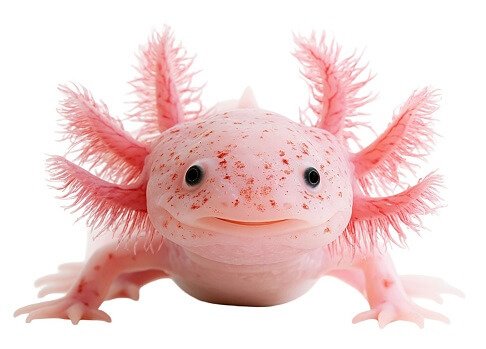 If your kid plays video games or loves cute ocean and pond creatures, they have probably pointed at a pink, smiling water animal with fluffy frills on its head and asked you what it is. That funny little swimmer is an axolotl, a real-life salamander that looks like it hopped straight out of a cartoon.
While they look simple and sweet on the outside, their bodies can do things that almost no other animal on Earth can match.
11 Interesting & Fun Axolotl Facts for Kids They Will Love to Know about
When you were a kid, you probably learned that frogs and salamanders start out in the water and later climb onto dry land. Wait until you and your little one see how the axolotl breaks that rule and even regrows missing body parts like a superhero.
Grab some animal picture books or pull up a chair with your kid so you can read through these together. Now let us take a look at those fun axolotl facts!
1. They Can Regrow Lost Legs and Tails Without a Single Scar
When you scrape your knee on the sidewalk, your skin heals with a little bump or scar, and human bodies can never grow back a lost finger or toe. Life underwater can be rough for a young salamander, especially when hungry neighbors nip at its legs or tail.
If an axolotl loses a leg or tail, it does not get a scar at all! Instead, its body gathers special repair cells into a healing bud called a blastema, rebuilding fresh bone, muscle, nerves, and skin to create a brand-new, working leg in about 6 to 8 weeks.
Even more surprising, this healing superpower lets an axolotl regrow missing parts of its heart, spine, eyes, and brain, which is why scientists study them to learn how humans might heal serious injuries one day.
2. A Grown-Up Axolotl Weighs About as Much as a Deck of Playing Cards
Looking at a close-up photo of an axolotl swimming in a glass tank makes it hard for your kid to guess how big this animal really is. You might wonder if it is as tiny as a goldfish or as big as a family dog.
Most full-grown axolotls measure about 8 to 12 inches long, with an average size around 9 inches, making them just a little longer than a 7.5-inch school pencil. A few rare giants have stretched up to 18 inches, but most adults could easily fit across your two hands.
Because their soft bodies are made to glide gently through water, healthy adults typically weigh between 3.5 and 8.8 ounces (100 to 250 grams). That means a young adult feels as light in your hands as a single deck of playing cards, while a plump grown-up weighs about as much as a cup of water.
3. They Suck Up Food Like an Underwater Vacuum Cleaner
When you sit down for dinner, you use your flat back teeth to chew up your food before swallowing. An axolotl hunts for earthworms, small water insects like dragonfly larvae, and tiny freshwater snails on the lake floor, but it has a mouth that cannot chew at all!
Instead of real chewing teeth, an axolotl only has tiny ridges inside its mouth to grip slippery prey. To catch dinner, it snaps its mouth open fast and sucks in water and food all at once like an underwater vacuum cleaner.
Because they swallow prey whole without chewing, axolotls rely entirely on strong stomach acids to digest their food. In nature, they live over soft mud, and pet owners have to make sure tanks have no small aquarium gravel, because swallowing loose stones can cause severe tummy blockage.
4. They Keep Their Baby Tadpole Bodies for Their Whole Lives
Most amphibians, like frogs and land salamanders, hatch in water as swimming babies called larvae and later change their bodies so they can walk on dry land. That big body change is how a tadpole turns into a hopping frog.
Axolotls skip that transformation completely! Because their bodies do not produce the thyroid hormone that triggers metamorphosis, they stay in their baby larval form for their entire lives, a rare biological trait that scientists call neoteny. Much like how the amazing duck-billed platypus breaks standard mammal rules, axolotls break amphibian rules by growing into full adults, laying eggs, and keeping their swimming tail fin and feathery gills forever!
You can explain it to your kid as growing up to be as tall as a parent while still keeping all of your baby teeth forever.
5. They Hide in the Mud All Day and Come Out at Night
Out in nature, big wading birds like herons and storks, along with large fish, love to hunt for soft salamanders during the bright daytime hours. Swimming out in the open under the sun would be very risky for a slow axolotl.
To stay safe while swift sky hunters like the peregrine falcon fly high above and sharp-beaked herons hunt the shallows, an axolotl spends the entire day burrowed deep in soft mud and tangled water plants on the lake bed. Tucking into the thick vegetation acts like an invisible camouflage blanket.
Once night falls and the lake turns pitch-black, the axolotl quietly crawls out of the mud to hunt for food in the dark, using special pressure-sensing pores on its head to feel vibrations in the water.
6. Those Fluffy Branches on Their Heads Are Actually Outside Gills
The first thing your little one will notice on an axolotl is the set of three feathery branches sticking out from each side of its head. They look a lot like fancy party crowns or soft tree branches waving in the water.
Those fluffy frills are actually feathery external gills that allow the axolotl to breathe underwater. Whenever water flows across those thin, feathery strands, the gills pull oxygen out of the water so the salamander can stay at the bottom of the lake.
Remarkably, an axolotl can breathe in four different ways: using its feathery gills, absorbing oxygen directly through its permeable skin, gulping air into its lungs at the surface, and absorbing oxygen through the inside lining of its mouth!
7. They Signal Each Other by Doing a Spinning Underwater Waltz Dance
Frogs make loud croaking sounds to call to each other at night, but axolotls live quietly at the bottom of still lakes without loud voices. They need a gentle way to communicate underwater when spring arrives between March and June.
To let each other know they are ready to start a family, a male and female axolotl perform an underwater waltz dance together. They slide close to one another and twirl around in a circle along the bottom of the lake.
After dancing together, the male leaves small genetic packets called spermatophores on smooth stones or plant leaves, which the female picks up so she can fertilize and lay her eggs the following day.
8. Wild Axolotls Live in Only One Spot on Earth Inside Mexico City
Because axolotls are so common in zoos and home aquariums around the world, it is easy to assume that millions of them swim in rivers everywhere. In reality, wild axolotls have the smallest natural home of almost any famous animal.
While they once lived in two lakes near Mexico City (Lake Xochimilco and Lake Chalco), today the water canals of Lake Xochimilco are the only place on Earth where wild axolotls still live. Long ago, Indigenous farmers built floating gardens called chinampas in this lake, creating calm, plant-filled canals where axolotls thrived.
Sadly, urban runoff, habitat loss, and invasive fish like carp and tilapia have caused wild populations to crash from 6,000 axolotls per square kilometer in 1998 to fewer than 36 per square kilometer today. Because wild axolotls are Critically Endangered, Mexican scientists and local farmers are actively restoring chinampa refuges with natural biofilters to provide clean, predator-free canal sanctuaries.
9. A Mother Lays Up to 1,000 Eggs One by One on Underwater Plants
Many birds and furry animals build a single nest and spend weeks feeding their babies, but an axolotl mom uses a smart hiding trick instead. Piling hundreds of eggs in one spot on the lake bottom would make them an easy snack for hungry fish.
During breeding season, a mother axolotl lays between 300 and 1,000 eggs, placing each egg individually on underwater plants and rocks. Spreading her eggs out one by one helps keep them hidden from predators swimming past.
About 10 to 14 days later, tiny half-inch larvae hatch out with swimming tails and feathery gills, sprouting front legs first after a week, back legs a few weeks later, and hunting small water critters completely on their own without parental help.
10. Wild Axolotls Are Not Actually Pink Like Cartoon Characters
If your kid has seen axolotls in cartoons, popular video games like Minecraft, or stacked on store shelves as plush toys, you might imagine every axolotl in nature is bright bubblegum pink. That pink look is by far the most famous image of the animal worldwide.
In the wild, however, axolotls are usually dark brown or black with tiny speckles rather than pink. Wearing dark, muddy colors acts as natural camouflage so they can hide against the dark dirt and weeds at the bottom of the lake.
The cute pinkish-white axolotls you see in pet aquariums have a genetic condition called leucism. Almost all captive pet axolotls trace their lineage back to a single white male inside a group of 34 live axolotls brought from Mexico to Paris, France, in 1864!
11. Their Name Comes From an Ancient Aztec Language and Means “Water Dog”
Try saying the word “ax-oh-lot-ul” out loud with your kid, and you will notice right away that it does not sound like a normal English word. Even though some people nickname it the “Mexican walking fish,” it is a salamander with a name rooted in ancient history.
The word axolotl comes from Nahuatl, the language of the ancient Aztecs, and it means “water dog” or “water monster”. The Aztecs linked this little swimmer to Xolotl, their ancient god of fire and lightning.
Today, this little salamander is a national treasure in Mexico. In late 2021, the Bank of Mexico released a beautiful purple 50-peso banknote featuring an axolotl in Lake Xochimilco, which won the prestigious international award for the world’s most beautiful banknote!
Frequently Asked Questions (FAQs)
What do axolotls eat?
Axolotls are carnivores that eat earthworms, small freshwater fish, water snails, crustaceans, and aquatic insect larvae such as dragonfly nymphs. Because they do not have chewing teeth, they snap open their wide jaws and suck prey directly into their mouths like a vacuum cleaner!
What is a baby axolotl called?
A baby axolotl is called a larva (or larvae for more than one), and unlike frogs, axolotls keep their baby larval features for their entire lives.
Where do axolotls live in the wild?
Wild axolotls live only in the freshwater canals of Lake Xochimilco in Mexico City, Mexico, after disappearing from nearby Lake Chalco.
How big and heavy is a full-grown axolotl?
Most adult axolotls grow to about 8 to 12 inches (20 to 30 cm) long, averaging around 9 inches. Healthy adults typically weigh between 3.5 and 8.8 ounces (100 to 250 grams), with smaller adults weighing about as much as a single deck of playing cards, while a few rare record-holders have reached 18 inches in length!
How fast can an axolotl swim?
Axolotls usually stroll lazily across the lake bottom on their four small feet. But if startled by a predator, an axolotl folds its legs against its body and snaps its powerful tail back and forth, shooting forward in a burst of speed up to 3 to 4 miles per hour (5 to 6 km/h). That might sound modest, but for an 8-inch salamander, it equals swimming more than five times its body length in a single second!
How long do axolotls live?
In the wild, axolotls typically live for about 5 to 8 years due to natural predators, water quality, and habitat challenges. However, axolotls kept in cool, clean water in zoos and home aquariums frequently live 10 to 15 years, and well-cared-for individuals have even lived past 20 years!
For a long time, you might have thought every axolotl was bright pink or that they were a type of fish. Learning how they keep their baby gills for life and regrow missing legs makes sharing these stories with your kid a lot more fun.
That was it, folks! Hope you and your little one enjoyed these amazing facts about axolotls.