
11 Amazing Animal Cell Facts for Kids [UPDATED]
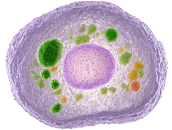 Look closely at the back of your hand when you wiggle your fingers. Your skin looks like one smooth piece, your muscles pull your fingers back and forth, and you cannot see a single tiny building block with your bare eyes.
Yet every inch of your body, your family dog, and the birds in your backyard is built from trillions of microscopic living rooms called animal cells. Each tiny cell eats, makes energy, cleans up trash, and talks to its neighbors all day long.
11 Interesting & Fun Animal Cell Facts for Kids They Will Love to Know about
Behind their microscopic size, animal cells are bustling miniature cities packed with specialized workers. From electrical cables that run down your leg to recycling bubbles that dissolve cellular waste, every tiny part has a crucial job.
Sharing these bite-sized science stories with your child turns an invisible world into an exciting microscopic safari.
Now let us take a look at those fun animal cell facts!
1. One Single Nerve Cell Can Stretch as Long as a Baseball Bat
Most cells in your body are way too small to see without a microscope. That makes it easy to think every animal cell is just a tiny speck.
However, nerve cells have long, thin cable parts called axons that can stretch over 1 meter (about 3 feet) long. That means a single nerve cell in your body can be as long as a baseball bat.
Your longest nerve cell is part of the sciatic nerve, running from your lower back down your leg to the tips of your toes to carry signals back and forth. Motor neurons carry signals to muscles, while sensory cells bring signals back.
2. About 10,000 Human Cells Can Fit on the Head of a Pin
Try holding up a tiny sewing pin and looking at the flat metal top. It looks barely big enough to hold a speck of dust.
Most animal cells measure just 10 to 30 micrometers across, so about 10,000 human cells could sit together on the head of a single pin.
Even though microscopic, the egg of a bird, like one laid by a backyard mockingbird or an ostrich, is actually one single giant animal cell you can hold in your hand. An ostrich egg can weigh three pounds!
3. Animal Cells Use Thousands of Tiny Power Plants to Make Energy
Green plants use green parts called chloroplasts to turn sunlight into food, but animal cells have zero chloroplasts. Because you cannot make snacks from sunshine, your cells have to get energy from the food you eat.
Inside the cell, tiny bean-shaped parts called mitochondria combine food molecules with oxygen to make energy for your body. They turn that food into a special energy fuel called ATP and let out water and carbon dioxide as waste.
High-energy muscle cells, like the athletic sprinting muscles powering a greyhound, pack thousands of mitochondria to keep running at top speed. Mitochondria originally lived as separate bacteria.
4. New Animal Cells Are Born by Splitting in Two
Animal cells do not lay little eggs to make baby cells. When your body grows or heals a scraped knee, your cells need a fast way to make more cells.
Through cell division called mitosis, an animal cell copies everything inside itself and divides into two identical cells. Inside the middle of the cell sits a control center called the nucleus, which acts like the brain of the cell.
The nucleus holds thread-like chromosomes and DNA that pass complete instructions to the two new cells so they know exactly what job to do. A protein ring pinches the cell until it splits.
5. Your Body Replaces 330 Billion Cells Every Single Day
Your cells work hard every day, and many of them wear out quickly. Your body runs a nonstop daily replacement schedule to keep you healthy and strong.
Every single day, about 330 billion cells in the human body die and get replaced by fresh new ones. Around 86 percent of those daily replacement cells are blood cells and the cells lining your intestines.
In contrast, special cells inside your brain and eyes are formed before birth and can last for your entire lifetime. Marrow makes millions of red cells each second!
6. Animal Cells Have a Smart Skin Instead of a Hard Wall
Plant cells are locked inside stiff, woody boxes called cell walls that help trees stand up straight. If animal cells had stiff walls like plants, you would not be able to bend your fingers, run, or smile.
Animal cells do not have cell walls at all, which lets them bend and change their shape easily. Instead, every animal cell is wrapped in a flexible outer skin called the cell membrane.
Supported by internal protein fibers, this smart membrane acts like a security gate that lets helpful nutrients come inside while blocking germs. The flexible membrane is made of a lipid bilayer.
7. Animal Cells Talk to Their Neighbors to Build Organs
One single animal cell cannot pump blood or move your legs all by itself. In any animal with billions of cells, every cell has to talk to its neighbors and work as a team.
Nerve cells send fast electrical signals to adjacent cells, just like specialized shock cells inside an electric eel. Other cells share chemical messages through tiny channels to move at the exact same time.
When matching animal cells team up, they form tissues, which assemble into whole organs like your heart and stomach. Gap junctions help heart cells beat together.
8. Every Animal Cell Is Filled Mostly With Water
When you look at a picture of an animal cell, it looks like a solid little ball. In real life, the inside of a cell is much more like a water balloon filled with jelly.
About 70 percent of a cell’s mass is water. Inside the outer membrane, this water mixes with salts and proteins to form a fluid called the cytosol.
Together with suspended organelles, this watery cytoplasm keeps the cell alive as biochemical reactions take place every second. The fluid dissolves salts for easy movement.
9. Over 200 Different Cell Types Work Together in Your Body
Not all animal cells look alike or do the same chore. Your body needs different shapes of cells to build hard bones, stretchy skin, and strong muscles.
An adult human body holds about 30 trillion cells divided into about 200 different cell types. Stem cells act as starter cells, while red blood cells carry oxygen and muscle cells help you jump.
Specialized adipose fat cells store energy and provide insulation, much like the thick blubber cells warming a polar bear in freezing snow. Big muscle cells make up most body weight.
10. An Elephant Does Not Have Bigger Cells Than a Mouse
Look at a giant elephant next to a tiny field mouse, and it is easy to guess that the elephant must have huge cells. Many people believe bigger animals are built from bigger cells.
In biological truth, the average size of each cell type is similar whether you examine a mouse, a massive elephant, or a prowling tiger. A red blood cell from an elephant is about the same size as one from a mouse.
An elephant is bigger simply because its body holds trillions more cells than a mouse, not because its individual cells are larger. Diffusion limits keep cells small.
11. Animal Cells Have Their Own Built-In Recycling Crew
Just like your kitchen at home creates empty wrappers and food scraps, a busy animal cell creates worn-out parts every day. If that clutter piled up inside the cell, the cell would stop working.
To stay clean, animal cells use tiny bubble-like sacs called lysosomes that act as the cell’s trash and recycling crew. Two scientists named Theodor Schwann and Matthias Schleiden first showed in 1839 that cells are the basic living units of all animals, and later tools revealed how inner parts like lysosomes keep them clean.
Each lysosome is packed with digestive enzymes that break down old cell parts, big food molecules, and invading germs so the cell can reuse the clean building blocks. Christian de Duve discovered lysosomes.
Frequently Asked Questions (FAQs)
1. What are the 3 main parts of an animal cell?
Most animal cells have three main parts: the outer cell membrane, the watery cytoplasm, and the nucleus in the middle.
2. How is an animal cell different from a plant cell?
Animal cells do not have stiff cell walls or green chloroplasts, which means they cannot make food from sunlight and can change shape much more easily than plant cells.
3. How many animal cells are in the human body?
An adult human body holds about 30 trillion human cells, with females averaging about 28 trillion and males averaging about 36 trillion.
4. What is the biggest single animal cell?
The egg of a bird is a giant single animal cell you can see with your eyes, while a thin nerve cell can stretch over 1 meter (about 3 feet) long.
5. How long do animal cells live?
Many blood and gut cells are replaced constantly within the 330 billion cells your body swaps out daily, while some brain and eye cells last your whole life.
6. What do ribosomes and the Golgi apparatus do inside an animal cell?
Ribosomes build important proteins for the cell, and the Golgi apparatus acts like a post office that packages those proteins to send them where they are needed.
Next time your kid scrapes a knee or takes a big bite of lunch, you can remind them that trillions of tiny cells are busy turning that food into energy and building brand-new skin. Even though you cannot see them without a microscope, those tiny flexible cells work together every second to keep you moving.
That was it, folks! Hope you and your little one enjoyed these amazing facts about animal cells.


