11 Surprising Ant Facts for Kids [UPDATED Facts]
 A dropped cracker crumb on the sidewalk usually vanishes into a marching line of tiny ants within minutes. Watching them carry snacks twice their size down the driveway is guaranteed to spark a dozen curious questions from your child.
Those tiny backyard neighbors actually use some of the most surprising superpowers and clever teamwork tricks in nature. Sharing a few fun secrets about their hidden underground cities will turn your next neighborhood walk into an exciting bug safari.
11 Interesting & Fun Ant Facts for Kids They Will Love to Know about
When you were a kid, you probably wondered how a tiny bug could lift a giant leaf without getting squished or how thousands of ants fit inside one little dirt hill. You might have even followed a trail of ants across the patio just to see where their secret door was hiding.
These tiny insects have some of the coolest tricks in nature, from drinking their food like a juice box to gluing tree leaves together into bedrooms.
Now let us take a look at those fun ant facts!
1. Leafcutter Ants Can Carry Leaves 30 Times Their Own Weight
Carrying a heavy backpack home from school can feel like hard work for your arms and legs. Now imagine picking up something fifty times heavier than your entire body and marching all the way home with it held high over your head!
For a tiny leafcutter worker ant, super-strength is an everyday reality: it can lift and carry foliage up to 50 times its own body weight in its jaws! Engineers at Ohio State University discovered that an ant’s neck joint can withstand pressures up to 5,000 times the ant’s body weight before giving out.
To slice through thick leaves, their serrated mandibles (jaws) vibrate over a thousand times a second like microscopic electric saws, giving them jaw power that rivals fearsome insect predators like the praying mantis!
2. Most Ants Are Smaller Than a Paperclip
Have you ever had to get right down on your hands and knees just to spot an ant crawling through the backyard grass? Because most ants are so tiny, it is easy to walk right past them without noticing their six little legs.
Across the globe, ants come in a remarkable range of sizes, measuring between 0.03 inches and 2 inches (0.75 to 52 millimeters) long! The smallest known ants on Earth, like tiny thief ants, are barely larger than a speck of black pepper or the sharp tip of a crayon.
On the other end of the scale, the largest living ants, such as the giant Amazonian hunting ant (Dinoponera) and African driver ant queens, grow up to 2 full inches (5 centimeters) long, making them as long as an adult’s thumb or a AA battery!
3. Adult Ants Can Only Swallow Liquid Food Like a Juice Box
When you see ants hauling solid bread crumbs, seeds, or insect bits across the pavement, it looks like they are getting ready to sit down and crunch a solid meal. Their digestive systems actually work in a completely different, fascinating way!
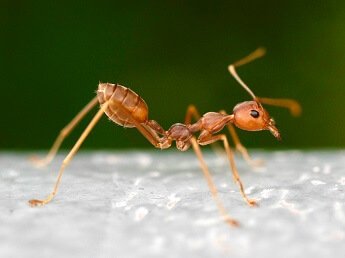
Adult worker ants have narrow waists and can swallow only liquid food. When a worker chews solid food, the crumbs pass into a filtering chamber inside its mouth called an infrabuccal pocket, where digestive juices squeeze out all the rich liquid nutrients for the ant to sip like a juice box before spitting out the dry leftover pellet.
Adults bring the solid crumbs back to their baby larvae, who have chewing mouthparts to digest solid proteins! Adult ants also store extra liquid food inside a second belly called a crop (or social stomach), allowing them to share sweet sips with hungry sisters back home.
4. Baby Ants Hatch Without Legs and Need Help Opening Their Cocoons
When human babies are born, they already have tiny hands, feet, and faces. Baby ants, however, go through a complete four-stage transformation (egg, larva, pupa, and adult), just like a caterpillar transforming into a winged insect!
When baby ants hatch from their eggs as larvae, they look like tiny, legless white grubs with no eyes. Attentive nurse ants feed them constantly until the growing babies spin a protective silken cocoon around themselves, similar to the cocoons spun by moths, to rest and grow as pupae.
When a young ant finishes growing, its soft white body is called a callow. A gentle nurse ant carefully bites a tiny opening in the silk cocoon, helps pull its legs and antennae free, and grooms it clean until its shiny outer shell hardens!
5. Army Ants Rest by Holding Legs to Make a Living Camp
After a long day of playing outside, you sleep in a cozy bed that stays in the exact same bedroom every night. One famous group of nomadic insects never builds a permanent bedroom because their entire colony is almost always on the move!
Army ants live in colossal hunting swarms of up to 2 million ants that march across the jungle floor catching insects and spiders. When it is time to rest, they do not dig an underground anthill: hundreds of thousands of worker ants link their claws and legs together to build a giant living nest called a bivouac out of their own bodies!
This living ball can hang three feet wide, creating air-conditioned internal hallways and a protected central nursery for the queen and her babies. While on the march, army ants even link bodies across gaps to build living bridges so thousands of sisters can sprint across without falling!
6. Ants Do Not Have Lungs and Breathe Through Tiny Side Holes
Take a deep breath and feel your chest expand as fresh air rushes into your lungs. Ants run, dig, and carry heavy loads all day, yet they do not possess a nose, a mouth for breathing, or lungs anywhere inside their bodies!
Instead, ants breathe through a row of microscopic valves along the sides of their bodies called spiracles. Air passes through these openings directly into an internal branching network of tiny tubes called tracheae, delivering oxygen straight to their cells just like in dragonflies!
Because an ant can clamp its spiracles shut to lock out water, many ants can survive being submerged underwater for up to 24 hours in a temporary state of suspended animation until the water recedes.
7. Ants Talk to Each Other Using Scent Trails and Antenna Taps
If your family had millions of brothers and sisters living together in dark underground tunnels, shouting would get way too chaotic. Ants have developed an incredible silent communication system to keep up to millions of colony members working in perfect harmony!
They talk using chemical scent messages called pheromones, released from special glands. Other ants decode these invisible scents using their two elbowed antennae, which can smell, taste, touch, and measure wind directions all at once! Pheromones tell sisters where to find snacks, warn when enemies attack, and signal when a worker needs food.
Ants can even make sounds! By rubbing a tiny ridge on their waist against a grooved plate on their belly, called stridulation, worker ants produce squeaks and clicks to call for rescue if buried by a tunnel cave-in.
8. Weaver Ants Glue Tree Leaves Together Using Sticky Baby Silk
Most ants you spot in your neighborhood dig underground tunnels or pile up dirt anthills. In tropical forests across Africa, Asia, and Australia, weaver ants prefer to build magnificent green mansions high in the treetops!
To construct a nest, teams of worker ants form living chains, gripping each other’s waists with their jaws to pull broad green leaves together against powerful tension. Once the leaves touch, other workers carry their baby larvae in their jaws, using them like living glue guns!
When workers gently tap the larvae’s heads, the babies squeeze out threads of sticky liquid silk that fuse the leaf edges into a weatherproof home. A single weaver ant super-colony can weave hundreds of these leaf pavilions across dozens of trees!
9. Every Single Worker and Soldier in an Ant Colony Is a Girl
When you watch a busy crew of ants digging tunnels, marching in lines, and guarding their nest, it is natural to imagine a mix of boys and girls sharing the chores. The reality of an ant colony is an amazing surprise for kids: every single worker and soldier ant is female (a girl)!
All the foraging, tunnel-digging, nursery care, and nest defense are carried out exclusively by sisters. Their mother is the queen ant, who holds the record as the longest-living insect in the world: queens of some species have lived in scientific laboratories for nearly 30 years!
Boy ants (called drones) do not do any work in the nest. They are born with wings, live only a few weeks during mating season, and take to the skies during nuptial flights to help a young queen start a new colony before dying.
10. Carpenter Ants Do Not Actually Eat the Wood They Chew
When people spot large black carpenter ants scurrying out of a porch post or fallen log beside little piles of sawdust, they often worry the ants are eating the wood. That is a common myth!
Unlike termites, carpenter ants cannot digest cellulose and do not eat wood at all. They use their powerful mandibles only to carve out smooth, clean tunnels and galleries inside dead or damp wood to shelter their eggs, pushing the leftover wood shavings (called frass) out through small slits like tidy housekeepers.
When carpenter ants get hungry, they head outdoors to forage for insects, flower nectar, and their favorite delicacy: sweet honeydew, which they harvest by gently stroking tiny garden aphids like miniature dairy cows!
11. Leafcutter Ants Help Protect the Amazon From Forest Fires
You might wonder how tiny insects could ever protect a giant jungle full of towering trees. In the Amazon Rainforest, millions of leafcutter ants act as the ecosystem’s most important cleanup and safety crew!
Leafcutter ants were the world’s first farmers, cultivating underground fungus gardens over 50 million years before humans invented agriculture! They do not eat the leaves they harvest; instead, they chew the leaves into green pulp to feed a specialized mushroom fungus that provides food for their colony of up to 8 million ants.
As armies of leafcutters march along their wide highway trails every day, they strip away dry fallen leaves and dead twigs. By clearing wide lanes of bare dirt through the undergrowth, they create natural firebreaks that prevent ground fires from spreading across the rainforest floor!
Frequently Asked Questions (FAQs)
1. What do ants eat?
Adult ants consume only liquids, such as sweet flower nectar, plant sap, and honeydew from aphids. They collect solid seeds and insects to feed to their baby larvae, while leafcutter ants eat a unique mushroom fungus they cultivate underground.
2. What are baby ants called?
Baby ants hatch from eggs as legless, grub-like larvae. After growing and resting inside a protective silken cocoon or pupal casing, they become pupae, and newly emerged soft-bodied adults are called callows.
3. How many species of ants live on Earth?
Entomologists have classified over 14,000 distinct species of ants worldwide, with thousands more yet to be discovered. They thrive in nearly every habitat across the globe except for the frozen continent of Antarctica.
4. How long do ants live?
Most worker ants live for several weeks to a year, while male drones live only a few weeks. In contrast, queen ants are the longest-living insects on Earth, with some queens surviving for up to 25 to 30 years in protective nests!
5. How many eyes and legs does an ant have?
An ant has six legs attached to its thorax and two large compound eyes made of multiple lenses to detect motion. Many species also have three simple light-sensing eyes (ocelli) arranged in a triangle on their forehead to navigate by sunlight.
6. How much do all the ants on Earth weigh together?
A landmark scientific study published in 2022 estimated that there are 20 quadrillion (20,000,000,000,000,000) ants on Earth! Their combined biomass weighs about 12 million metric tons of dry carbon, outweighing all wild birds and wild mammals combined.
Next time you and your child spot a tiny ant marching across the sidewalk, take a closer look to see what it is carrying in its jaws and whether its sisters are following the same invisible scent trail. Watching how hard those little sisters work together makes every trip to the backyard or park a lot more fun for curious kids.
That was it, folks! Hope you and your little one enjoyed these amazing facts about ants.