11 Amazing Elephant Facts for Kids [UPDATED]
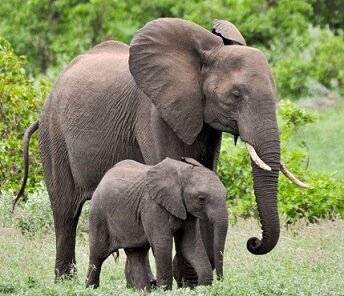
Standing near the elephant yard at the zoo feels a lot like watching a living, breathing fire truck stroll right past you. One loud trumpet blast or a big splash of water from that long, wiggly trunk is usually all it takes to make your kid stop and stare.
Behind those floppy ears and giant feet, these gentle giants have some clever ways of swimming, taking baths, and looking after their babies. You can share these fun discoveries with your child the next time an elephant pops up in a bedtime book or on a family zoo trip.
11 Interesting & Fun Elephant Facts for Kids They Will Love to Know about
Imagine having your nose and your upper lip joined together into one stretchy tool that can pick up a tiny berry or spray a shower of water over your back. That is everyday life for an elephant, an animal so smart it can even recognize its own reflection in a mirror.
Even though they are the heaviest animals walking on land today, they actually walk on the tips of their toes and look after their families with great care.
Now let us take a look at those fun elephant facts!
1. They Swim Across Deep Water and Use Their Trunks Like a Snorkel
You might think an animal as heavy as a truck would sink straight to the bottom of a deep river. Instead, elephants are strong swimmers that love cooling off and playing in the water. While massive Arctic animals like polar bears are famous swimmers, people are amazed to learn that elephants love deep water too!
When an elephant enters deep water, its huge lungs and body fat provide natural buoyancy like a giant floating cork. To breathe while its big body stays underwater, the elephant holds the tip of its trunk high above the waves like a built-in snorkel.
This clever breathing trick lets wild elephants swim for long distances across rivers, lakes, and even open ocean waters between islands without getting tired.
2. They Are the Largest Living Land Animals on Earth
No other animal walking on land today comes close to matching the size and weight of a full-grown elephant. Even though they are gigantic, a thick, squishy pad of fat under their heels acts like a shock absorber, helping these multi-ton giants walk almost completely silently on their tiptoes!
The biggest of all is the African savanna elephant, which can stand 10 to 13 feet (3 to 4 meters) tall at the shoulder. Big males often weigh 12,000 to 15,000 pounds (up to 6,800 kilograms), and the largest ones can reach 8,000 kilograms (9 tons).
To picture just how big that is, one large male elephant weighs about as much as three or four family cars stacked together. If one stood in your driveway, it would be tall enough to peek right into a second-story bedroom window.
3. One Grown-Up Elephant Eats About 100 Kilograms of Plants a Day
Keeping the biggest body on land moving takes a giant mountain of fresh greens every single day. Elephants are herbivores, which means they only eat plants such as grasses, leaves, fruit, twigs, roots, and tree bark.
An adult elephant uses its trunk to strip leaves off branches and eats about 100 kilograms (220 pounds) of food each day. It also drinks around 100 liters (26 gallons) of water daily, sucking up to 2 gallons of water in a single breath before spraying it straight into its mouth.
That daily meal weighs as much as a grown man, and that much water could fill up a whole bathtub at your house. If an elephant is extra hungry and thirsty after a long walk, it can eat and drink twice that amount in a single day.
4. Baby Elephants Grow Inside Their Mom for Almost Two Years
Growing a baby as big and smart as an elephant takes a lot of patience before birth. Mother elephants carry their babies in their bellies longer than any other mammal on Earth.
An elephant pregnancy lasts 18 to 22 months, which is almost two full years. When the mother finally gives birth, she usually has one single baby, called a calf, covered in a light coat of fuzzy hair that fades away as it grows.
A newborn calf already stands about 3 feet (1 meter) tall and weighs around 220 pounds (100 kilograms). That brand-new baby is as tall as your kitchen counter, and remarkably, it can stand up on its own wobbly feet within just 20 to 30 minutes of being born!
5. They Lie Down to Sleep for Only a Few Hours Each Night
You need a whole night of sleep to feel rested for school or play, but an elephant has a very different bedtime schedule. Because elephants have to spend so many hours finding food and water, they cannot stay in bed for long.
In fact, wild elephants only sleep for about 2 hours each night, making them some of the shortest-sleeping mammals on Earth! They often take quick power naps while standing up against a sturdy tree, only lying down every few days so their heavy bodies do not crush their lungs.
Before you are even halfway through your night of sleep, wild elephants are already wide awake, active, and ready to look for breakfast.
6. Their Skin Is an Inch Thick, Yet It Can Feel a Single Fly Land on It
The word “pachyderm” comes from a Greek word that means thick-skinned, and it is easy to see why elephants earned that nickname. From far away, their gray and brown wrinkly skin looks as tough as the bark on an old oak tree.
On some parts of an elephant’s body, the skin grows up to 1 inch (2.54 centimeters) thick, which is as thick as a hardcover picture book. Even with all that thickness, the skin is packed with sensitive nerve endings, so an elephant can feel a single tiny fly landing on its back.
To protect their skin from bug bites and the hot summer sun, elephants roll in cool mud and spray dust over their backs like natural sunscreen, while deep skin wrinkles trap moisture to keep them cool.
7. Their Secret Low Rumbles Can Be Heard Up to 5 Miles Away
You have probably heard an elephant make a loud trumpet sound, as well as squeaks or growls when it gets excited. What is even cooler is that elephants do most of their long-distance talking using sounds so low that human ears can barely hear them.
Elephants make deep, low-pitched infrasonic rumbles that travel through the air and send gentle vibrations through the ground. Other elephants “listen” with their feet, using special nerve sensors in their foot pads to feel the ground tremors and understand messages or danger warnings from afar.
These deep rumbles can reach another elephant from more than 2 miles to up to 5 miles (8 kilometers) away. That is like talking to your friend across a distance of 80 football fields without ever picking up a phone.
8. Three Different Elephant Species Roam Across Africa and Asia
Wild elephants do not build cozy dens or stay in one small yard because their herds need huge open lands to find enough plants and water. Depending on the season, they can travel hundreds of kilometers each year to reach fresh feeding spots and water holes.
Scientists recognize three living species of elephants today: the African savanna elephant, the African forest elephant, and the Asian elephant. You can tell African elephants apart by their giant ears shaped like the continent of Africa, while Asian elephants have smaller ears and rounded backs.
Across Africa and countries in Asia like India and Thailand, elephants live in grassy savannas, thick rainforests, and swamps. In Asian jungle forests, elephants even share their lush habitat with majestic Bengal tigers!
9. Wise Older Mothers Called Matriarchs Lead Every Elephant Herd
Growing up as a baby elephant means having a whole team of moms, aunts, and sisters watching over you at all times. Female elephants, called cows, are very protective and form close family groups of two to eight animals.
Every family group is led by an experienced, older female known as the matriarch, who remembers where to find hidden water holes during droughts. When danger approaches, the matriarch rallies the herd into a tight protective circle around the calves to scare away predators like lions.
Young male elephants stay with their mothers and aunts until they are about 10 to 14 years old. After they grow up, males (called bulls) leave the family herd to live on their own or hang out in small bachelor groups.
10. Elephants Are Not Really Scared of Tiny Mice
Cartoons and funny storybooks love to show a giant elephant standing on its hind legs in terror the moment a tiny mouse runs by. If you have ever wondered if that silly scene happens in the wild, you can cross it off the list.
In real life, the idea that elephants are terrified of mice is a popular myth. Elephants are not afraid of mice at all, though a tiny animal darting suddenly through the grass right under their feet can startle them for a split second because they cannot see clearly beneath their trunks.
What elephants are truly terrified of are tiny buzzing bees! Because bee stings inside an elephant’s sensitive trunk or around its eyes hurt terribly, the buzzing sound of a bee swarm will make an entire elephant herd run the other way!
11. Wild Fruit Trees Depend on Elephants to Plant Their Seeds
Every time an elephant goes for a long walk after eating sweet fruit, it works like a giant gardener for the forest and savanna. Because elephants eat so much food and travel so far, they help shape the entire habitat for other wild animals.
Certain trees across Africa and Asia, such as elephant apple, wild jackfruit, and wild guava, rely directly on elephants to spread their seeds. An elephant swallows the fruit whole, its stomach acids soften the tough seed coats, and the seeds travel safely inside its belly for miles.
Later on, the elephant deposits the seeds in its dung, giving them natural fertilizer to sprout into new trees. Just like treetop seed dispersers such as spider monkeys, elephants act as nature’s ultimate gardeners for the forest floor!
Frequently Asked Questions (FAQs)
What do elephants eat?
Elephants are plant-eating herbivores that eat grasses, leaves, fruit, bark, twigs, and roots, munching through about 100 kilograms (220 pounds) of food a day.
What is a baby elephant called?
A baby elephant is called a calf, and a newborn stands about 3 feet (1 meter) tall and weighs around 220 pounds (100 kilograms) at birth.
Do elephants really love eating peanuts?
No, elephants do not naturally eat peanuts in the wild, and the idea that peanuts are their favorite snack is just a pop culture myth.
Can elephants jump?
No, elephants cannot jump because their heavy body weight and bone structure keep them from lifting all four feet off the ground at the same time.
How fast can an elephant run?
Even with their huge size, elephants can move surprisingly fast and reach a typical charging speed of about 40 kilometers per hour (25 miles per hour).
How long do elephants live?
Elephants can live for about 60 to 70 years in the wild, although median life expectancy across some populations is around 38 to 47 years.
From using their trunks as built-in snorkels to chatting with friends miles away through deep rumbles, elephants are full of surprises that make learning about nature fun for your child. Next time you visit the zoo or read an animal book together, ask your kid which one of these giant discoveries they want to share first.
That was it, folks! Hope you and your little one enjoyed these amazing facts about elephants.