11 Amazing Northern Lights Facts for Kids [UPDATED]
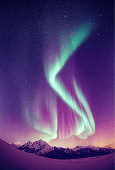 Most nights, stepping outside into the backyard means looking up at a dark sky with white stars and a bright Moon. On certain nights near the top of the world, though, the dark sky suddenly lights up with giant moving ribbons of green, pink, and red.
Your kid might look at a picture of those glowing ribbons and ask if someone pointed a giant flashlight at the clouds. The real reason the sky lights up is even cooler, and it starts all the way out at the Sun.
11 Interesting & Fun Northern Lights Facts for Kids They Will Love to Know about
Scientists call the Northern Lights the aurora borealis, and they are one of the biggest natural light shows on Earth. Even though they look like painted clouds floating just above the trees, they actually happen way up at the edge of space.
From invisible space winds to astronauts flying right through the glow, these sky ribbons are full of surprises for curious kids. Now let us take a look at those fun Northern Lights facts!
1. They Are Powered by Fast Particles from the Sun
You already know the Sun gives Earth warm light during the day so plants can grow and you can play outside. As explored in our thrilling space facts, the Sun also sends out an invisible stream of tiny electricity bits, called electrons and protons, all day and night.
Scientists call this fast stream the solar wind, and it zooms through space at an average speed of 400 kilometers per second (about 250 miles per second). When energy from this solar wind reaches Earth’s upper sky and bumps into the air, it creates the glowing Northern Lights.
Those tiny space particles crashing into the air work just like flipping the switch on a glowing neon sign in a store window. Every tiny bump lets out a little speck of light, and billions of bumps together light up the whole night sky.
2. They Glow Way Higher Than Passenger Airplanes Fly
When you see a photo of the Northern Lights over snowy trees, the glowing ribbons look as low as rain clouds. In real life, you could never touch them from the top of a tall mountain.
Most Northern Lights glow between 60 and 185 miles (100 to 300 kilometers) above the ground, and the tallest ones can reach 370 miles (600 kilometers) high. That is way up in the upper layer of Earth’s sky, where the air is super thin.
To picture how high that is, think about looking out the window of a big passenger airplane on a family trip. The Northern Lights start many times higher up in the sky than regular passenger airplanes ever fly.
3. Oxygen Gas Turns the Sky Bright Green and Red
Have you ever noticed that most photos of the Northern Lights show bright green ribbons across the dark sky? The colors are not painted there by rainbows or water drops.
Each color comes from speedy space particles bumping into a specific gas in the air at a certain height. Green is the most common color because space particles hit oxygen gas around 60 to 120 miles (100 to 200 kilometers) above Earth.
When those particles hit the exact same oxygen gas much higher up, above 120 miles (200 kilometers), the oxygen glows bright red instead of green. It is just like one single crayon that changes color depending on how high you hold it up in the air.
4. Nitrogen Gas Creates Blue and Pink Ribbons
Oxygen is what you breathe in to stay active, and it makes the green and red lights high overhead. Another gas in our air, called nitrogen, teams up to make the other colors in the sky show.
When fast space particles bump into nitrogen gas between 60 and 120 miles (100 to 200 kilometers) high, the sky lights up in shades of blue. If the particles dive even lower, down to 60 miles (100 kilometers) or lower, nitrogen gas glows bright pink.
During a big storm from the Sun, you can see green curtains in the middle with a bright pink border dancing along the bottom edge.
5. Earth’s Invisible Magnetic Shield Guides Them to the Poles
If the Sun is blowing fast particles toward Earth all the time, why do you not see the Northern Lights above every backyard every single night? The answer is hidden deep inside our planet.
As shared in our fascinating Earth facts, Earth acts like one giant magnet wrapped in an invisible magnetic bubble called the magnetosphere. This protective shield stretches about 40,000 miles (60,000 kilometers) toward the Sun and pushes most of the solar wind safely around our planet, like water flowing around a rock in a stream.
Just like a refrigerator magnet pulls paperclips toward its two ends, Earth’s magnetic shield guides trapped space particles toward the North Pole and South Pole. That is why people living in far northern places like Alaska, Canada, Iceland, and Norway see the lights most often.
6. They Have a Twin at the South Pole Called the Southern Lights
Because people talk about the Northern Lights all the time, it is easy to think only the North Pole gets a glowing night sky. However, every magnet has two ends, a north end and a south end.
While the aurora borealis is glowing near the North Pole, an almost identical ring of light is glowing near the South Pole at the very same time. Scientists call this southern twin the aurora australis, or the Southern Lights.
Fewer people see the Southern Lights in person because the area around the South Pole is covered by the icy continent in our Antarctica facts for kids and wide open ocean. Scientists and the birds in our cool penguin facts get the best front-row seats to that southern show.
7. Myth Busted: They Happen in the Daytime Too (Not Just on Cold Winter Nights)
A lot of people believe that freezing cold winter air causes the Northern Lights, or that they only switch on after bedtime. That is actually a popular myth!
Auroras happen both day and night all year long, even in the middle of a warm summer afternoon. Temperature on the ground has nothing to do with making the lights glow high up in the sky.
You cannot see them during the day because normal sunlight is a million times brighter than the aurora. That is why the dark nights highlighted in our winter solstice facts for kids provide the very best conditions to watch them dance.
8. Astronauts on the Space Station Fly Right Through Them
When you watch the Northern Lights from the ground, you have to tilt your head all the way back to look up at the sky. Astronauts living in space get a completely different view from their window.
The International Space Station circles Earth at roughly 220 to 250 miles (about 400 kilometers) above the ground. That is the exact same height zone where many tall green and red auroras form.
Because the space station (which is as roomy inside as a five-bedroom house or two Boeing 747 airplanes) orbits at that height, astronauts look down at the green ribbons and sometimes fly straight through the middle of an aurora.
9. They Move Like Giant Curtains Blowing in the Wind
In a storybook picture, the Northern Lights sit completely still on the page like a painted rainbow. If you watch them in real life, though, they are always moving across the dark sky.
The lights twist and shift into different shapes called arcs, rays, bands, waves, and shimmering curtains. One minute a green band looks like a quiet road across the stars, and the next minute it ripples into tall vertical stripes that brighten and fade.
Watching a bright aurora from the snow looks just like watching long fabric curtains gently sway back and forth in front of an open bedroom window.
10. Giant Planets Like Jupiter and Saturn Have Auroras Too
Earth is a pretty special home, yet our planet does not hold the sole record for glowing polar lights. Any planet that has both a blanket of gas (an atmosphere) and a magnetic field can make its own auroras.
Space telescopes have captured giant glowing auroras around the poles of big gas planets like Jupiter and Saturn. Even distant icy planets like Uranus and Neptune get their own polar light shows when particles in space hit their gases.
So if you ever look at Jupiter through a backyard telescope, remember that giant rings of light are glowing at the top and bottom of that planet too.
11. Galileo Named Them After the Dawn and the North Wind
Families living in the far north have watched and shared stories about the glowing night sky for thousands of years. For example, the Iñupiat people of northern Alaska call the Northern Lights kiuġuyat in their language.
In the early 17th century (1619), the famous Italian astronomer Galileo gave the lights their two-part scientific name, aurora borealis. Together, those two old words mean “northern dawn”.
Galileo borrowed Aurora from the ancient Roman goddess of the morning dawn, and borealis from the ancient Greek word for the north wind. It was a fitting name for a sky that lights up in the dark as if the morning sun were rising in the north.
Frequently Asked Questions (FAQs)
What causes the Northern Lights in simple words?
The Northern Lights happen when fast, tiny particles from the Sun get guided by Earth’s magnetic shield toward the poles and bump into oxygen and nitrogen gases high up in the air, making them glow.
What is the most common color of the Northern Lights?
Green is the most common color of the Northern Lights, and it is made when space particles bump into oxygen gas about 60 to 120 miles (100 to 200 kilometers) above Earth.
How high up in the sky are the Northern Lights?
Most Northern Lights glow between 60 and 185 miles (100 to 300 kilometers) above the ground, though the highest red lights can reach up to 370 miles (600 kilometers) high.
Do the Northern Lights only happen in the winter?
No, the Northern Lights happen all year long during both day and night, yet winter is the best time to see them because the nights are long and dark.
Where are the best places to see the Northern Lights?
You can see the Northern Lights best in far northern places near the Arctic Circle, including Alaska, northern Canada, Iceland, Greenland, Norway, Sweden, and Finland.
What are the lights at the South Pole called?
The lights near the South Pole are called the aurora australis, or the Southern Lights, and they happen at the exact same time as the Northern Lights.
The next time you and your kid switch on a glowing nightlight at bedtime, you can remind them that Earth has its very own giant nightlight glowing 60 miles above the poles. All it takes is a breeze of tiny particles from the Sun and a blanket of air to turn the dark sky green and pink.
That was it, folks! Hope you and your little one enjoyed these amazing facts about the Northern Lights.