11 Amazing Octopus Facts for Kids [UPDATED]
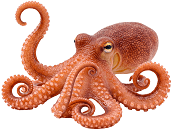 Pressing your nose against the cool glass at an aquarium gets really exciting when eight suction-cupped arms suddenly glide out from behind a rock. Your kid will probably point right away and ask how an animal shaped like a squishy water balloon can crawl, hide, and open jars all by itself.
Beneath all those twisty arms is one of the smartest and most unusual creatures living in the ocean. Sharing these simple details together will give you and your child plenty to talk about on your next trip to the aquarium or the beach.
11 Interesting & Fun Octopus Facts for Kids They Will Love to Know about
Most sea animals swim around with fins and a tail, but an octopus does almost everything differently. It crawls along the seafloor on eight flexible arms, changes colors in a blink, and solves tricky puzzles just like a little detective.
Even better, its soft body holds surprises that sound like something straight out of a cartoon, including extra hearts and extra brains. Now let us take a look at those fun octopus facts!
1. An Octopus Has Three Hearts Pumping Inside Its Body
Put your hand over your chest and you can feel your one heart beating to move blood through your body. Breathing underwater and moving eight strong arms takes a lot of extra work for an octopus.
To keep up with all that work, an octopus has three hearts pumping inside its soft body. Two smaller hearts do the job of pumping blood straight to the gills so the octopus can gather fresh oxygen from the water.
Then the third heart pumps that oxygen-rich blood out to the rest of the body so all its organs and arms stay strong and active. As a fun bonus for how its blood works, an octopus uses a copper-rich protein called hemocyanin, making its blood bright blue instead of red.
2. The Biggest Octopus Can Stretch as Long as a School Bus
There are about 300 species of octopuses swimming in the world’s oceans, and they come in wildly different sizes. The tiniest species measures only about 1 to 2 inches (2.5 to 5 centimeters) long, which is small enough to sit right on top of your thumb.
At the other end of the scale is the giant Pacific octopus, the biggest octopus species in the ocean. An average adult grows to about 16 feet across and weighs around 110 pounds, which is about as heavy as a big golden retriever or an older kid.
Some giant Pacific octopuses grow to 18 feet (5.5 meters) in body length with an arm span of nearly 30 feet (9 meters), and the biggest record-holder weighed over 600 pounds. A 30-foot arm span is about as long as a full-size yellow school bus parked on your street!
3. They Crack Hard Crab Shells With a Beak and a Tooth-Covered Tongue
Octopuses are meat-eating hunters whose favorite meals include crunchy crabs, clams, shrimp, and lobsters. You might wonder how a soft, squishy animal can eat dinner when its food is locked inside a rock-hard shell.
Hidden underneath the middle of its eight arms is a tough, sharp mouth shaped like a parrot‘s beak. The octopus grabs a crab with its strong suckers, pulls it to its mouth, and uses that hard beak to crack the shell right open.
If a clam or crab shell is too thick to crack, the octopus uses a tongue-like tool inside its beak called a radula, just like the toothed tongue found in snails, which is covered in rows of tiny teeth. It drills a neat little hole through the shell and squirts in special saliva that turns the meat inside soft like jelly so it is easy to eat.
4. Mother Octopuses Guard Their Eggs for Weeks Without Eating
When a mother octopus is ready to have babies, she finds a safe hole or rock cave to lay thousands of tiny eggs. She hangs her eggs inside the den and stays right beside them to keep hungry fish away.
A mother octopus is so dedicated to protecting her babies that she guards them for four to eight weeks, and giant Pacific octopus mothers guard theirs for months, without ever stopping to eat. She gently cleans the eggs and keeps fresh water flowing over them the whole time.
When the eggs finally hatch, the tiny baby octopuses look like miniature copies of their parents. They float near the water’s surface eating tiny drifting plankton for several weeks before sinking down to live on the ocean floor all by themselves.
5. Octopuses Sleep in Cozy Dens All Day and Hunt at Night
During the bright daytime hours, the ocean is full of hungry hunters like tiger sharks, seals, sea otters, and big fish looking for a meal. Because an octopus does not have a hard outer shell to protect itself, swimming out in the open during the day is risky.
To stay safe, octopuses spend most of the day resting quietly inside dark underwater dens under rocks and caves. Once the sun goes down and the water gets dark, they wake up and sneak out to hunt at night.
They crawl quietly along the bottom of the sea on their eight arms, using the darkness to surprise sleeping crabs, shrimp, and fish before heading back to bed.
6. An Octopus Has Nine Brains So Every Arm Can Help Solve Puzzles
Trying to wiggle eight different arms at the exact same time would be super confusing if one brain had to do all the work alone. Nature gave the octopus a clever setup to handle all those moving parts.
An octopus actually has nine brains inside its body. One central brain is in charge of the whole animal, while eight smaller brains made of nerve cells sit right at the base of each arm to control that arm on its own.
Having nine brains makes the octopus one of the smartest invertebrates (animals without a backbone) on Earth. In fact, two-thirds of all its nerve cells live inside its arms, helping them touch, taste, and figure out how to twist the lids off jars, escape mazes, and pull crabs from fishing nets.
7. They Show Their Mood by Changing Color Instead of Making Sounds
Octopuses do not bark, chirp, or talk with voices under the water. Instead, they use their skin like a living color screen to hide from danger or show how they feel.
Their skin is packed with special pigment cells that let them switch colors in a flash between gray, brown, pink, blue, and green. Tiny muscles in their skin can even pop up into little bumps or smooth out flat so they match rough rocks, coral, or swimming near a camouflaged puffer fish on sandy floors.
You can even tell an octopus’s mood just by looking at its color. When an octopus feels scared, it can suddenly turn pale white, and when it gets angry or startled, it flashes bright fiery red.
8. Having Zero Bones Lets Them Squeeze Through Tiny Cracks
If you tried to crawl inside a narrow glass jar, your hard bones and ribs would block you right away. An octopus never has that problem when it looks for a hiding spot on the seafloor.
Because an octopus is an invertebrate, it has zero bones and no backbone anywhere in its soft, bag-like body. The only hard piece in its entire body is its small, sharp beak made of tough chitin.
As long as a crack or hole is wide enough for that little beak to fit through, the rest of the octopus can squish right in behind it. That is how an octopus can pour itself through the neck of a bottle, a tiny gap between rocks, or the crack under a box lid to build a safe home.
9. Most Octopuses Prefer Living Alone in Their Own Tidy Dens
Many ocean animals, like dolphins and clownfish, love swimming around in big family groups. Octopuses are different and prefer having their own space.
Almost all octopuses are solitary animals, which means they live completely alone inside their own private rock caves and holes. Inside its home, an octopus acts like a neat and tidy housekeeper, sweeping away shells and trash to keep its den clean.
Living alone is also a smart way for a small octopus to stay safe because larger octopuses will sometimes eat smaller octopuses if they get too close. On the rare occasion when several octopuses do gather in the same area, scientists call the group a consortium.
10. Octopuses Are Actually Shy Animals That Escape With Ink Instead of Fighting
Pirate movies and old adventure stories often show the octopus as a mean sea monster waiting to grab ships or wrestle divers. That spooky monster story is a total myth!
In real life, an octopus is a very timid and shy animal that wants nothing to do with a fight. When a hungry shark, whale, or eel swims too close, the octopus uses two clever escape tricks to get away fast.
First, it squirts a dark cloud of black ink into the water that hangs like a shadow to block the enemy’s view and confuse it. At the exact same moment, the octopus shoots a strong jet of water out of a funnel on its body, rocketing itself backward to safety like a water balloon letting out air.
11. The Word “Octopus” Comes From Greek Words Meaning “Eight-Footed”
Have you and your kid ever laughed at how funny the word “octopus” sounds out loud? The name actually tells you how many limbs to count!
The word octopus comes from two ancient Greek words: okta, which means “eight,” and podos, which means “foot.” Even though its name means eight-footed, scientists call its eight limbs arms rather than feet because it uses them to grab food and hold onto rocks.
Scientists also place the octopus in a special animal group called cephalopods, a word that means “head-foot,” because its eight arms attach right below its big eyes and head-shaped body. And if you spot more than one octopus at the aquarium, you can call them octopuses or octopi!
Frequently Asked Questions (FAQs)
How many hearts and brains does an octopus have?
An octopus has three hearts that pump blue blood through its body and nine brains (one central brain plus eight mini-brains in its arms).
What do octopuses like to eat?
Adult octopuses are meat-eaters that mostly hunt crabs, clams, shrimp, lobsters, and fish, while tiny newborn octopuses eat drifting plankton.
How long do octopuses live in the wild?
Most octopus species have short lives of about 2 years (like the red octopus and blue-ringed octopus), while the giant Pacific octopus lives about 3 to 5 years in the wild.
What happens if an octopus loses an arm?
If an octopus loses one of its eight arms to a predator, its body can grow a brand-new arm right back in its place.
Where do octopuses live?
Octopuses live in every ocean around the world, mostly hiding on the seafloor inside rock crevices, coral reefs, and caves near shallow coastlines as well as in deeper cold waters.
How big is the largest octopus in the world?
The giant Pacific octopus is the largest species, averaging about 16 feet across and 110 pounds, though the biggest one ever recorded stretched 30 feet across and weighed over 600 pounds.
Next time you and your child visit an aquarium, see if you can spot an octopus camouflaged against the rocks or counting its eight suction-cupped arms on the glass. Watching this shy, nine-brained puzzle solver in person is even more fun once you know all the secrets hiding inside its soft body.
That was it, folks! Hope you and your little one enjoyed these amazing facts about octopuses.