11 Surprising Desert Facts for Kids [UPDATED]
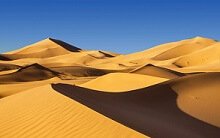 Stepping barefoot onto dry playground sand on a sunny afternoon makes you hop right back into your shoes. Your child might point at that warm sandbox and ask what it is like in a real desert where rain almost never falls from the sky.
Most cartoons show deserts as empty seas of yellow sand with one lonely cactus and a bleached animal skull. In real life, deserts are dynamic, living wonderlands filled with underground animal cities, singing mountains of sand, and even giant sheets of polar ice. Sharing the true science behind these extreme environments is an awesome way to spark your young explorer’s curiosity about geology and weather.
11 Interesting & Fun Desert Facts for Kids They Will Love to Know about
A desert is scientifically defined not by its heat, but by its extreme dryness. Any region that receives very little rain or snow all year long qualifies as a true desert. Because water is so scarce, desert plants and creatures carry specialized evolutionary toolkits to survive burning sun, freezing nights, and years of drought.
You and your child are about to discover how dry sand can hum like a pipe organ, why parts of South America went centuries without rain, how cacti store tons of drinking water, and why African dust feeds green rainforests thousands of miles away.
Now let us trek across the dunes and explore these incredible desert facts!
1. Deserts and Drylands Cover One-Third of All Land on Planet Earth
You might picture deserts as isolated, tiny patches tucked into distant corners of the globe. In reality, arid landscapes take up an enormous share of our planet’s surface.
True hyper-arid and arid deserts cover roughly 20 to 25 percent (one-fifth) of Earth’s total land area. If you also count semi-arid drylands that receive very little rainfall, these thirsty zones cover fully 33 percent (one-third) of all land on Earth! Only forests cover more global land area than drylands do.
The largest hot desert on Earth is the mighty Sahara Desert in northern Africa, stretching across 3.55 million square miles (9.2 million square kilometers). That makes the Sahara Desert roughly the same colossal size as the entire United States or the country of China!
2. Death Valley Holds the World Record for the Hottest Air Temperature Ever Recorded
Hot deserts have cloudless skies and dry air that allow solar rays to bake the ground with intense energy. During peak summer heat waves, as explored in our collection of fun summer facts for kids, daytime temperatures in hot deserts easily climb above 100 degrees Fahrenheit (38 degrees Celsius).
On July 10, 1913, Death Valley in California set the official world record for the highest ambient air temperature ever recorded on Earth at an astonishing 134 degrees Fahrenheit (56.7 degrees Celsius)! Death Valley gets so scorching hot because its lowest basin, Badwater Basin, sits 282 feet (86 meters) below sea level surrounded by steep mountain walls. As superheated air sinks into the deep valley, it undergoes adiabatic compression, heating up like a gigantic natural convection oven.
That world-record air temperature is hotter than the steamiest water flowing from your home bath faucet. On another scorching afternoon in Death Valley, scientists measured the bare desert ground temperature baking at a blistering 201 degrees Fahrenheit (93.9 degrees Celsius), just eleven degrees shy of boiling water!
3. A Lack of Air Moisture Causes Desert Temperatures to Plummet at Night
If you packed only shorts and t-shirts for a desert camping adventure, you would find yourself shivering under your sleeping bag after sunset! The exact same dry atmosphere that lets the sun bake the desert all day also lets all that heat vanish into space at night.
In humid climates, invisible water vapor in the air acts like a cozy greenhouse blanket that traps daytime warmth near the ground. Because desert skies have almost zero humidity and no cloud cover, there is no thermal blanket to hold heat. Furthermore, dry sand has a very low specific heat capacity, meaning it warms up quickly in sunlight but loses its heat almost instantly once darkness falls.
As a result, desert air temperatures routinely swing by 35 to 50 degrees Fahrenheit (20 to 28 degrees Celsius) in a single day! A desert that scorches at 105 degrees Fahrenheit at lunchtime can easily plunge down into the chilly 40s or even below freezing before sunrise.
4. Parts of the Atacama Desert Went Centuries Without a Single Drop of Rain
While most deserts experience a brief, dramatic rainstorm once or twice a year, some hyper-arid desert regions can go decades or even centuries without seeing a drop of moisture fall from the sky.
The Atacama Desert in northern Chile is the driest non-polar place on Earth. It is trapped in a rare double rain shadow: the towering Andes Mountains block moist storm clouds blowing from the Amazon basin, while the cold offshore Humboldt Current chills coastal air, creating a thermal inversion that prevents rain clouds from forming over the coast.
Weather stations in parts of the central Atacama have recorded over 40 consecutive years without rain. Even more mind-boggling, geological riverbed studies show that core sectors of the Atacama went roughly 400 years without significant rainfall between 1570 and 1971! Because the soil is so bone-dry and free of organic matter, NASA scientists use the Atacama Desert to test robotic Mars rovers before sending them into space.
5. Most Deserts Are Made of Rocky Pavements, Not Giant Sand Dunes
Hollywood movies almost always show deserts as endless oceans of golden, wind-rippled sand dunes. In truth, giant sandy dune seas, known geologically as ergs, make up only about 20 percent (one-fifth) of all the deserts in the world!
The remaining 80 percent of desert terrain consists of flat gravel plains, bare bedrock plateaus called hammadas, and rugged mountain canyons, like the timeless stone landscapes featured in our captivating ancient Egypt facts for kids. Fierce desert winds blow away fine silt and light dust in a process called wind deflation, leaving behind heavy pebbles and rocks that lock tightly together to form a hard surface called desert pavement.
Over thousands of years, these surface pebbles develop a glossy, dark coating called desert varnish, made of manganese and iron oxides painted by microscopic bacteria. When rare cloudbursts hit, rushing flash floods carve deep, steep-walled gullies called wadis in North Africa and the Middle East, or arroyos across the American Southwest.
6. Rare Booming Dunes Can Sing and Hum Like Deep Musical Instruments
Deserts are typically famous for their peaceful, echoing silence. Yet on roughly 35 special sand dunes across the globe, the sand itself can produce loud, booming musical melodies!
This eerie acoustic phenomenon is called singing sands or booming dunes. It occurs when billions of uniformly sized, smooth sand grains slide down the steep slip face of a dune together during a dry sand avalanche. As the cascading grains rub past the motionless sand layer beneath them at the natural angle of repose, their friction self-synchronizes, turning the entire dune into a gigantic acoustic speaker!
At the Eureka Dunes in California, the Namib Desert in Africa, and the Badain Jaran dunes in China, sliding sand emits a powerful low-frequency bass note between 60 and 105 Hertz. The sound can boom at over 100 decibels, resembling a deep cello chord, a foghorn, or a low-flying airplane engine that can be heard miles away across the dunes!
7. The Largest Desert in the World Is Covered in Freezing Polar Ice
When people think of a desert, they picture scorching heat, rattlesnakes, and sunburns. However, climate scientists measure deserts strictly by how much moisture they receive, not by how hot their thermometers climb.
Any landscape that receives less than 10 inches (250 millimeters) of precipitation each year qualifies as a desert. Under this scientific rule, the frozen continent of Antarctica is officially the largest desert on Earth, spanning a massive 5.5 million square miles (14.2 million square kilometers)! The Arctic Polar Desert is the second largest, while the hot Sahara ranks third.
Because freezing cold air cannot hold moisture vapor, the high inland plateau of Antarctica receives less than 2 inches (50 millimeters) of precipitation a year. In fact, a bizarre region called the McMurdo Dry Valleys in Antarctica has been completely free of snow and ice for nearly 2 million years, kept bone-dry by ferocious 200-mile-per-hour katabatic winds that sweep down from the mountains and evaporate every ice crystal in their path!
8. Underground Burrows Provide Cool Air-Conditioned Havens for Desert Wildlife
If you hike across a desert at noon, you might think the sun-baked plains are completely empty of animal life. In reality, the desert is teeming with life, but the animals are sleeping right beneath your hiking boots!
Because desert soil has high thermal resistance, daytime heat cannot penetrate deep underground. Just one to two feet (30 to 60 centimeters) below the surface, the temperature remains steady and comfortable at 80 to 85 degrees Fahrenheit (27 to 29 degrees Celsius), even when the surface sand above is hot enough to fry an egg! Furthermore, air trapped inside a sealed underground tunnel holds a humid 80 to 90 percent relative humidity, preventing creatures from losing precious body water through breathing.
To stay safe, more than half of all desert animals adopt a fossorial (burrowing) lifestyle. Animals like kangaroo rats, desert tortoises, and fennec foxes dig cozy underground suites. Even birds take advantage of these natural shelters, such as the resourceful underground nesters explored in our fascinating burrowing owl facts for kids, which move into abandoned mammal burrows to escape the blazing midday sun!
9. Incredible Metabolic Water Lets Small Desert Mammals Live Without Drinking
Finding an oasis or flowing river across dry desert sands can take days of searching. Because water is so scarce, many desert animals have evolved the miraculous superpower of never needing to take a single sip of liquid water!
Desert kangaroo rats and spiny mice can live their entire lives without drinking liquid water. Instead, their bodies produce metabolic water internally! When a kangaroo rat digests dry seeds and plant fats, its cellular chemistry breaks down carbohydrates and oxygen into carbon dioxide and pure water. For every single gram of seed fat digested, its body manufactures over one gram of clean, fresh water!
To guard every droplet, desert animals possess ultra-efficient kidneys with long loops of Henle that produce crystal-thick, hyper-concentrated urine, recycling nearly 100 percent of their body fluids. Reptiles have their own ingenious solutions, like the long-lived reptiles highlighted in our amazing desert tortoise facts for kids, which store up to 40 percent of their body weight in water inside a specialized bladder to survive a full year without rain!
10. Saguaro Cacti Act as Giant Water Tanks That House the World’s Smallest Owl
Desert plants called succulents survive brutal dry seasons by storing tons of water inside their thick, fleshy tissues. Instead of broad flat leaves that lose water to dry air, cacti have sharp defensive spines that protect their stored water from thirsty desert herbivores.
The iconic saguaro cactus of the Sonoran Desert is a slow-growing desert skyscraper that can live for 150 to 200 years. A mature saguaro reaches 40 to 50 feet (12 to 15 meters) tall, supported by an internal wooden skeleton. To collect flash-flood moisture, a saguaro spreads shallow roots 50 feet wide, resting just a few inches below the ground surface. Its pleated vertical ribs expand like an accordion, allowing a single cactus to soak up and hold over 1,000 gallons (3,800 liters) of water, weighing over 4,000 pounds!
These majestic giants serve as high-rise hotels for desert birds. Desert woodpeckers drill nest holes into the cactus flesh, where the plant secretes a hard, woody scab called a “cactus boot” to seal the wound. Once abandoned, these insulated cavities provide safe, air-conditioned nesting spots for the incredible elf owl facts for kids, the world’s smallest owl, which raises its chicks high above hungry coyotes and snakes!
11. Saharan Dust Storms Cross the Atlantic Ocean to Fertilize the Amazon Rainforest
A dry, rocky desert might look like it has nothing in common with a lush, rainy jungle. Yet planet Earth has an astonishing interconnected weather cycle where the Sahara Desert keeps the greenest rainforest on Earth alive and thriving!
Every year, powerful trade winds sweep across northern Africa, lifting roughly 182 million tons of mineral dust high into the atmosphere. In 2015, NASA’s CALIPSO satellite tracked this massive dust plume across 3,000 miles of the Atlantic Ocean, proving that 27.7 million tons of Saharan dust settles directly over the Amazon River basin in South America every single year!
This trans-Atlantic dust is packed with phosphorus, a critical plant nutrient. Most of the dust originates from the Bodélé Depression in Chad, a dried-up ancient lakebed filled with millions of microscopic fossilized shells from freshwater algae. Because torrential tropical rains constantly wash phosphorus out of Amazonian soil, the 22,000 tons of Saharan phosphorus delivered by desert winds each year perfectly replenishes the jungle, helping towering rainforest trees grow lush, green, and strong!
Frequently Asked Questions (FAQs)
What scientifically makes a place a desert?
A desert is scientifically defined by its aridity index and moisture deficit rather than temperature. Any region that receives less than 10 inches (250 millimeters) of precipitation per year, where evaporation rates exceed incoming rain or snow, qualifies as a true desert.
What is the largest desert in the world?
The Antarctic Polar Desert is the largest desert on Earth, covering approximately 5.5 million square miles (14.2 million square kilometers). The Arctic Polar Desert ranks second at 5.4 million square miles, while the Sahara is the largest hot (non-polar) desert at 3.55 million square miles (9.2 million square kilometers).
Are all deserts hot all year round?
No, deserts are categorized into hot subtropical deserts (like the Sahara and Mojave) and cold deserts (like Antarctica and the Gobi Desert). Cold deserts experience sub-zero winter temperatures, and even hot deserts turn remarkably cold at night due to low humidity and rapid heat loss.
What is a desert oasis?
A desert oasis is a fertile, green haven where underground water reservoirs (artesian aquifers) reach the surface through natural springs or deep wells, allowing lush date palms, fig trees, and human farming communities to thrive amid barren sands.
How do desert plants survive with almost no rainfall?
Desert plants (xerophytes and succulents) survive through ingenious adaptations: storing thousands of liters of water in accordion-pleated stems like cacti, spreading wide shallow root nets to catch light rain, growing deep taproots over 100 feet down to reach groundwater, and replacing leaves with sharp protective spines to minimize water loss.
What was the hottest desert temperature ever recorded?
The highest official ambient air temperature ever recorded on Earth was 134 degrees Fahrenheit (56.7 degrees Celsius) at Furnace Creek in Death Valley, California, on July 10, 1913. On another summer afternoon, ground skin temperatures in Death Valley reached a scorching 201 degrees Fahrenheit (93.9 degrees Celsius)!
Next time your child builds a sandy fortress at the beach or playground, remind them that deserts are far more than empty sandbox plains. They are extraordinary landscapes where singing dunes hum in the wind, underground animals thrive without drinking water, and desert dust helps feed the greenest rainforests on our planet!
That was it, folks! Hope you and your little one enjoyed these amazing facts about deserts.