11 Amazing Earthquake Facts for Kids [UPDATED]
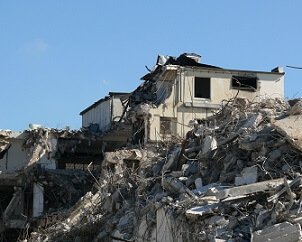
A heavy dump truck rolls down your street, and suddenly your bedroom window gives a tiny rattle. Now imagine the whole street wiggling under your shoes just like a bowl of jelly!
That big ground wobble happens when giant slabs of rock shift deep beneath your feet. Kids ask tons of great questions about why the ground shakes, and the real science behind it is full of surprises.
11 Interesting & Fun Earthquake Facts for Kids They Will Love to Know about
Even though the ground under your playground feels totally still, the outside of our planet is actually broken into giant rock puzzle pieces. These huge pieces never stop creeping around, and their bumpy edges create all the shaking we feel on the surface.
From invisible underground waves to space quakes on the Moon and Mars, our planet has some amazing secrets hiding under the dirt. Now let us take a look at those fun earthquake facts!
1. Giant Puzzle Pieces Under Your Feet Cause Earthquakes
The ground under your house feels like one solid piece of rock, but Earth’s outer skin is actually cracked into many giant pieces. Scientists call these massive rock pieces tectonic plates, and they fit together like a giant jigsaw puzzle covering the whole planet.
These giant puzzle pieces have been creeping around very slowly for millions of years, back when dinosaurs roamed on a single giant supercontinent called Pangaea. Because their edges are rough, two plates often get stuck together while the rest of the rock keeps pushing.
When the stuck edges finally snap and slip past each other along a crack called a fault, all that stored energy bursts out in a process called elastic rebound, shaking the ground just like a stretched rubber band suddenly snapping! For example, two giant plates in California slide past each other at about 2 inches (5 centimeters) per year, which is about as long as your thumb.
2. About 500,000 Detectable Earthquakes Happen Every Single Year
You might think the ground only shakes once in a long while because you rarely feel it wiggle under your shoes. In reality, our planet rumbles thousands of times every single week without most people ever noticing.
Scientists estimate that there are 500,000 detectable earthquakes in the world every single year, meaning that every single minute, sensitive instruments record about one earthquake somewhere on Earth! Out of that huge number, people can actually feel about 100,000 of them, while only about 100 are strong enough to cause damage to buildings or roads.
Most of the other quakes are so tiny that you could be sitting right on top of one eating your lunch and never feel a thing. Only sensitive science tools can spot those tiny daily trembles deep underground.
3. The Largest Recorded Earthquake Reached Magnitude 9.5
Scientists measure the size of an earthquake using a scale called magnitude, where bigger numbers mean a much bigger quake. Most quakes you hear about on the news are small or medium, but one giant quake in South America broke the world record.
On May 22, 1960, the largest earthquake ever recorded by science instruments hit Chile and reached a massive magnitude 9.5. That giant shake happened along an underground fault crack that was almost 1,000 miles long and 150 miles wide.
This single quake was so powerful that its energy waves traveled all the way around the globe and made our entire planet vibrate like a giant ringing bell for days! Scientists call that whole-planet ringing the free oscillation of the Earth.
4. One Big Earthquake Always Brings Smaller Aftershocks
When a big earthquake finishes shaking, the rocks underground do not settle down right away. The biggest, main shake is called the mainshock, and it is always followed by smaller quakes in the exact same spot called aftershocks.
Sometimes smaller shakes called foreshocks also happen first, though scientists cannot tell a shake is a foreshock until the bigger mainshock arrives later. Because cracked rocks keep adjusting as they settle into their new positions, the largest aftershock is usually about one whole magnitude smaller than the mainshock.
Depending on how big the mainshock was, these smaller aftershocks can keep popping up for weeks, months, and even years in that same area!
5. Earthquake Waves Race Through Rock Like Lightning and Thunder
When two blocks of rock suddenly slip underground, energy spreads out in all directions as seismic waves, just like ripples when you toss a pebble into a pond. Two main kinds of waves race through the rock, and scientists call them P waves and S waves.
The P waves are the fastest waves, zooming through solid granite at over 13,000 miles per hour! They always arrive first by squeezing and stretching the rock like a giant Slinky toy. Right behind them come the slower S waves, which wiggle the rock back and forth from side to side.
Scientists say P waves are like a flash of lightning and S waves are like the rumble of thunder that follows. Because P waves travel faster, they shake the ground under you first before the S waves show up to shake it again.
6. Special Machines With Hanging Weights Draw Zig-Zag Quake Lines
How do you draw a picture of the ground shaking if your table and pencil are shaking at the exact same time? Scientists solved this puzzle by building a clever recording tool called a seismograph.
A seismograph works using a rule of physics called inertia: an object at rest wants to stay at rest! The machine has a sturdy frame bolted tightly to the ground and a heavy weight hanging free on a spring. When an earthquake hits, the bolted frame shakes with the dirt, but the heavy weight hovers completely still in mid-air.
As the machine’s base moves underneath the still weight, it draws a trail of zig-zag lines called a seismogram. Before modern electronics, the biggest spring-pendulum seismometer ever built weighed about 15 tons, which is heavier than two adult elephants, and another one in Mexico City stands three stories tall like an apartment building!
7. The Rumbling Sound You Hear Usually Comes From Buildings, Not the Ground
If you have ever heard stories about a loud, spooky roar during an earthquake, you might think the deep underground waves are screaming through the dirt. However, your ears usually cannot hear the actual earthquake waves themselves.
Most earthquake waves vibrate at a very low frequency of less than 20 Hz, creating an inaudible sound called infrasound that is too deep for human ears to pick up. That means the energy waves traveling through the rock move almost silently beneath your shoes.
Almost all of the loud rumbling noise people hear during a quake actually comes from buildings, walls, windows, and the furniture inside them creaking, rattling, and groaning as they shake!
8. Most Big Earthquakes Happen Around the Pacific Rim and Alaska
Earthquakes can happen anywhere, but most of them cluster along giant fault zones on our planet. The biggest earthquake zone of all runs right around the edge of the Pacific Ocean, famously known as the Ring of Fire (or the circum-Pacific seismic belt).
About 81 percent of the world’s largest earthquakes happen along this single Pacific rim zone! A second major zone called the Alpide belt stretches from Java through the Mediterranean, slowly pushing up the soaring peaks of Mount Everest and creating about 17 percent of the world’s biggest quakes.
In the United States, Alaska gets more earthquakes than any other state, experiencing a big magnitude 7 quake almost every year. On the flip side, Florida and North Dakota have the smallest number of earthquakes of any U.S. states.
9. One Quake Made a Swimming Pool Slosh Over 1,200 Miles Away
An earthquake starts at a deep underground spot called the hypocenter, and the spot on the surface right above it is called the epicenter. While the strongest shaking happens near the epicenter, seismic waves can travel thousands of miles across the land, even along ocean trenches where tectonic plates collide deep beyond the reach of exploration submarines.
In 1985, a strong magnitude 8.1 earthquake struck Michoacan, Mexico, sending invisible rolling waves far across North America. Even though the University of Arizona in Tucson was 1,240 miles (2,000 kilometers) away, those distant waves still reached the campus!
The gentle rolling waves matched the natural rhythm of the university’s big swimming pool, creating a giant standing wave called a seiche that sloshed water back and forth until it spilled right over the edges like a sloshing bathtub!
10. Myth Busted: There Is No Such Thing as “Earthquake Weather”
You might hear grown-ups say that hot, dry, or muggy days are “earthquake weather” that will make the ground shake soon. Even ancient stories had wild ideas, like a legend that the Earth sits on a sled pulled by flea-bitten dogs and shakes whenever the dogs stop to scratch!
Scientists have tested this idea for decades, completely busting the myth that muggy, hot summer afternoons trigger sudden ground shaking. Earthquakes happen equally in cold weather, hot weather, rainy weather, and windy weather without any favorite season, because they start miles deep inside the rock where sunshine and clouds cannot reach.
While humans cannot predict earthquakes ahead of time, modern earthquake early warning systems can detect the fast, harmless P waves and instantly send alert chimes to smartphones a few crucial seconds before the slower, damaging shaking arrives!
11. Earthquakes Helped Scientists Discover Earth’s Core (And Even Happen on Mars!)
Nobody can dig a hole all the way to the center of the Earth, so how do we know what is hiding deep inside our planet? In 1906, a scientist named R.D. Oldham studied earthquake wave records and discovered Earth’s core for the very first time!
Because sideways S waves cannot travel through liquid, scientists proved that Earth has a melted liquid outer core wrapped around a solid inner core. Earthquake waves act like a giant planetary X-ray machine, revealing Earth’s hidden interior.
Even cooler, Earth is not the only place across space that shakes! Our Moon has deep moonquakes that can ring for over an hour because dry lunar rock has no water to soak up vibrations, and NASA’s InSight lander has even recorded hundreds of marsquakes rumbling on Mars!
Frequently Asked Questions (FAQs)
What causes an earthquake to happen?
An earthquake happens when two giant blocks of rock underground suddenly unstick and slip past each other along a crack called a fault, releasing stored energy waves that shake the ground.
Can scientists or animals predict when an earthquake will happen?
No, scientists cannot predict the exact day or time an earthquake will strike, though modern early warning systems can give a few seconds of warning once the first waves are detected.
What is the difference between the hypocenter and the epicenter?
The hypocenter is the deep underground spot where the fault first slips, while the epicenter is the spot on the ground surface directly above it.
How do underwater earthquakes cause tsunamis?
When a strong earthquake shakes the ocean floor, it suddenly lifts or drops a giant column of seawater, sending powerful waves racing across the ocean called a tsunami.
Could a giant earthquake ever swallow up a city or split the Earth in half?
No, faults slide past or over each other rather than opening into giant bottomless holes, and a magnitude 12 quake is impossible because it would require a fault larger than Earth itself.
How deep underground can an earthquake start?
Most earthquakes start in the upper crust, but the deepest ones occur where one plate sinks deep into Earth’s mantle down to 400 miles (750 kilometers) below the surface.
Next time you feel a heavy truck rumble past your house, you can tell your family how giant rock puzzle pieces and racing P waves and S waves make our planet shake. Knowing how our active planet works turns a scary wobble into an amazing science lesson you can share at the dinner table!
That was it, folks! Hope you and your little one enjoyed these amazing facts about earthquakes.