11 Amazing Glacier Facts for Kids [UPDATED Facts]
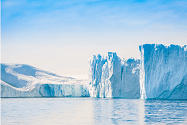 Pop an ice cube out of your kitchen freezer tray, and it melts in your warm hand in just a few minutes. Out in the coldest corners of Earth, fallen snow packs into giant rivers of ice so thick they can bury entire mountain valleys.
Your kid might think a glacier is just a big frozen block sitting still on a mountaintop. Once you look closer, you will find out that glaciers creep downhill, glow bright blue, and even house tiny worms that cannot survive warm weather.
11 Interesting & Fun Glacier Facts for Kids They Will Love to Know about
Glaciers look quiet from far away, yet they are busy shaping the land and storing most of the fresh drinking water on our planet. Some move fast enough to measure every single day, while others hold ancient ice that froze long before humans built cities.
Sharing these simple science truths with your child turns a plain lump of ice into a giant moving bulldozer. Every fact below uses plain, everyday ideas so your young reader can picture just how big and powerful these frozen rivers really are.
Now let us take a look at those fun glacier facts!
1. Glaciers Store Nearly Three-Quarters of All Freshwater on Earth
Most of the water on our planet is salty ocean water that you cannot drink, making up 97.2 percent of all water on Earth. Only a tiny slice of Earth’s water is fresh, and most of it is not sitting in lakes or rivers.
Glaciers lock up about 69 percent (nearly three-quarters) of the world’s freshwater inside their thick layers of ice. That makes glaciers the single biggest storehouse of freshwater anywhere on our planet.
Think of glaciers as giant frozen water towers parked on land. As explored in our Antarctica facts, if every bit of land ice on Antarctica and Greenland melted into the sea, ocean water around the world would rise higher than a 20-story building (over 220 feet combined).
2. The Largest Glacier in the World Is Over 270 Miles Long
Small mountain glaciers can be the size of a single football field, where your kid could run from one end to the other. Down in East Antarctica, one record-breaking river of ice makes a football field look like a postage stamp.
Lambert Glacier is the largest glacier in the world, measuring about 60 miles (96 kilometers) wide and more than 270 miles (435 kilometers) long. At its deepest spot, the ice goes down about 8,200 feet (2,500 meters) from top to bottom.
To help your child picture ice 8,200 feet deep, imagine stacking more than 270 yellow school buses nose to tail straight up into the sky. Driving a family car at highway speed alongside Lambert Glacier would take more than four hours just to reach the other end.
3. Soft Snowflakes Take More Than 100 Years to Squeeze Into Glacier Ice
You cannot build a glacier just by freezing a big lake in winter. As shared in our winter solstice facts, every glacier starts out as soft, fluffy snowflakes falling in cold places where more snow piles up in winter than melts in summer.
Year after year, fresh heavy snow buries the older snow underneath and squashes it down. After about one year, the snow packs into crunchy ice pellets called firn, and for most glaciers, it takes more than 100 years to press into solid glacier ice.
It works just like packing a loose snowball tightly between your mittens until it turns hard and heavy. On a glacier, the weight of millions of tons of snow on top does all the squeezing over a whole century.
4. Glacier Ice Is Officially a Type of Rock With Fist-Sized Crystals
If you ask your child to find a rock, they will probably pick up a hard gray pebble from the driveway. Scientists who study the Earth actually count glacier ice as a true mono-mineralic rock, which means a rock made of one single mineral.
Just like limestone is a rock made of one mineral, glacier ice is a natural rock formed when thousands of snowflakes press and grow together into dense crystals. Because the ice forms naturally on land from fallen snow, it follows the same rules as other rocks in nature.
Over many years of heavy squeezing, those tiny snowflake crystals merge and grow much bigger. In very old glacier ice, single ice crystals can grow as big as an adult fist, and some crystals in Alaska’s Mendenhall Glacier reach nearly 1 foot long!
5. Deep Glacier Ice Glows Bright Blue Instead of White
Fresh snow in your yard and ice cubes in your glass look bright white to your eyes. They look white because they are full of tiny trapped air bubbles that bounce every color of sunlight right back at you.
Deep inside a glacier, tremendous weight squeezes those air pockets down until the ice is packed super tight. When sunlight shines into this dense glacier ice, the ice soaks up the long red and yellow light waves while letting the short blue light waves scatter and bounce back out.
The deeper light travels through thick, bubble-free ice, the brighter that blue color looks. That is why newly broken chunks at the bottom of a glacier look like giant glowing pieces of blue candy.
6. Greenland’s Fastest Glacier Moves Up to 100 Feet Every Single Day
To even be called a glacier, a huge pile of ice has to be heavy enough to move under its own weight. Gravity pulls on the thick ice, making the bottom layers bend and slide slowly downhill like thick pancake batter.
Most glaciers creep along so slowly that you could stare at one all afternoon and never see it budge. However, through the icy realm featured in our polar bear facts, Greenland’s Jakobshavn Glacier is one of the fastest on Earth, sliding forward up to 100 feet (30 meters) per day.
Moving 100 feet in a single day equals the length of about three school buses parked in a line. While your kid eats breakfast, goes to school, and sleeps at night, that giant wall of ice moves three bus lengths closer to the sea.
7. Small Ice Chunks From Glaciers Are Called Bergy Bits and Growlers
When the front edge of a glacier slides into the ocean or a deep lake, giant blocks of ice crack and crash into the water. Scientists call this noisy breaking process calving, creating the floating icebergs seen in our penguin facts.
Not every piece of broken glacier ice is as huge as an office building, so smaller floating chunks get two funny names: bergy bits and growlers. Both names are real terms used by ocean scientists and ship captains to spot ice in the water.
A bergy bit sticks up 3 to 16 feet (1 to 5 meters) above the water and is about the size of a small cottage. A growler rises less than 3 feet (1 meter) out of the water and stretches under 16 feet (5 meters) long, making it about the size of your family car.
8. Glaciers Exist on Every Continent Except Australia
You might guess that glaciers only live at the freezing North and South Poles. While Antarctica and Greenland hold over 99 percent of Earth’s freshwater ice, glaciers actually cover about 10 percent of all land on our planet.
Because tall mountains stay freezing cold at the top all year round, glaciers live on every single continent except Australia. From the slopes in our Mount Everest facts to South America and Africa, real glaciers sit high up on the tallest peaks.
The mainland of Australia has no glaciers at all because its mountains are not tall and snowy enough to keep ice year-round. However, nearby islands in the Oceania region, like New Zealand and Western New Guinea, still have high mountain glaciers of their own.
9. Real-Life Ice Worms Live Inside Glaciers and Melt at 40 Degrees
Solid glacier ice sounds way too freezing for any animal to call home. Yet real ice worms live inside coastal glaciers in Alaska, Washington, Oregon, and British Columbia.
These tiny black or blue worms grow up to 1 inch (2.5 centimeters) long, which is just a little wider than a penny. They use tiny bristles on their bodies to grip the ice crystals, crawling up to 10 feet per hour to come out at dusk and munch on snow algae and pollen.
During bright sunny days, ice worms hide deep inside the ice to stay cold. Their bodies are built only for freezing temperatures, so if an ice worm warms up to just 40 degrees Fahrenheit, it literally melts and dies!
10. A “Retreating” Glacier Never Actually Moves Backward Up a Mountain
You have probably heard news stories say that a mountain glacier is retreating. That word makes many kids and adults think the glacier has shifted into reverse and started sliding backward up the mountain valley.
In real life, a glacier never flows backward up a valley. Just like water in a river, gravity only pulls heavy glacier ice downhill toward lower ground.
A glacier is called retreating only when warm weather melts the bottom tip (or breaks off icebergs) faster than new ice can slide down from the top. Think of an escalator moving down while people step off the bottom faster than new riders get on at the top: the ice keeps flowing downhill, even as the front edge shrinks back.
11. Glaciers Act Like Giant Bulldozers That Grind Boulders Into “Rock Flour”
As a heavy glacier slides down a mountain valley, it does not glide smoothly over the ground. Instead, it acts like a gigantic bulldozer, dragging rocks and boulders trapped underneath its belly across the mountain bedrock.
All that heavy scraping grinds hard boulders into a super fine powder called rock flour (or glacier flour), with tiny grains smaller than 1 micrometer across. As the glacier drags this gritty powder along, it scrubs and polishes solid mountain rock until it shines.
When summer meltwater washes that fine rock flour out of the glacier, the tiny stone particles float in the water for years without sinking. That floating rock powder is what turns glacial rivers and mountain lakes a thick, milky color.
Frequently Asked Questions (FAQs)
How old is the oldest glacier ice on Earth?
The oldest glacier ice in Antarctica may approach 1,000,000 years old, while Greenland’s oldest ice is more than 100,000 years old and Alaska’s oldest recovered glacier ice is about 30,000 years old.
What is the difference between a glacier and an ice cube?
Unlike a freezer ice cube, a glacier must form naturally on land from fallen snow and grow thick and heavy enough to move under its own weight.
How thick can a mountain glacier get?
Small glaciers can be a few tens of meters thick, while the largest glaciers in Alaska reach about 1,500 meters (nearly 5,000 feet) thick and continental ice sheets average about 1 mile (2 kilometers) thick.
What are the giant cracks on top of a glacier called?
Deep cracks that open up when a glacier flows rapidly over bumpy ground are called crevasses.
How big can floating icebergs from Antarctica get?
Ice shelves attached to Antarctica’s glaciers can break off giant floating icebergs that stretch more than 50 miles (80 kilometers) long.
Why do scientists drill deep tubes of ice out of glaciers?
Each year of snowfall creates a new layer in the glacier like a page in a history book, allowing scientists to study trapped air and dust to read Earth’s past weather.
Next time your child grabs an ice cube for a glass of water, ask them to imagine millions of snowflakes pressing together for 100 years to build a glowing blue river of ice. From car-sized growlers floating in the sea to tiny worms hiding inside the ice, glaciers prove that the coldest places on Earth are full of surprises.
That was it, folks! Hope you and your little one enjoyed these amazing facts about glaciers.