11 Amazing Venus Facts for Kids [UPDATED]
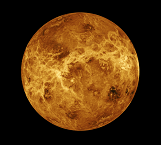 Step outside with your kid right after sunset, and you will often spot a super-bright point of light shining in the evening sky before any stars come out. Your child might point up and ask if it is an airplane or a giant star, only to learn they are actually looking right at the planet Venus.
Even though Venus looks calm and pretty from your backyard, it is actually the wildest, hottest planet in our whole solar system. From backwards sunrises to thousands of giant volcanoes, this rocky neighbor is full of surprises your kid will love sharing at the dinner table.
11 Interesting & Fun Venus Facts for Kids They Will Love to Know about
Venus is the second planet from the Sun and sits right next door to Earth in space. Because it is almost the exact same size as our home planet, scientists often call Venus Earth’s twin.
Once you peek beneath its thick clouds, however, you quickly see that Venus behaves nothing like Earth at all. Now let us take a look at those fun Venus facts!
1. Venus Is the Hottest Planet, Even Though It Is Not Closest to the Sun
Many people guess that Mercury is the hottest planet because it sits closest to the Sun. Even though Venus is the second planet from the Sun, it actually wins the prize as the hottest planet in our solar system.
This happens because Venus is wrapped in a super-thick blanket of gas made of more than 96 percent carbon dioxide. That heavy gas traps the Sun’s heat inside like a closed car parked in the driveway on a sunny afternoon.
All that trapped heat bakes the ground on Venus to 867 degrees Fahrenheit (464 degrees Celsius). That is way hotter than your kitchen oven and hot enough to melt a solid block of metal lead into a puddle of liquid.
2. Venus Is Almost the Exact Same Size as Earth
When you compare all eight planets in our solar system, Venus and Earth look like matching toys from the same box. They are both rocky planets with solid ground and very similar weight and size.
Venus measures about 7,521 miles (12,104 kilometers) across at its middle, while Earth is just a tiny bit wider at 7,926 miles (12,756 kilometers) across. Venus also has about 82 percent of Earth’s mass, so its surface gravity pulls on you at about 90 percent of what you feel on Earth.
If you shrank Earth down to the size of a regular basketball on your bedroom floor, Venus would sit right next to it and look almost as big as that exact same basketball.
3. One Single Spin on Venus Takes Longer Than Its Whole Year
On Earth, our planet spins around once every 24 hours to give us a day and takes 365 days to travel all the way around the Sun. On Venus, that schedule is completely flipped upside down.
Venus turns so slowly that it takes 243 Earth days just to spin around once on its axis. Meanwhile, because Venus sits closer to the Sun than Earth does, it finishes its whole trip around the Sun in only 225 Earth days.
That means one full spin on Venus actually takes 18 Earth days longer than a whole year on Venus. Your birthday on Venus would come around before the planet even finished turning around one single time.
4. Venus Spins Backwards, So the Sun Rises in the West
Every morning on Earth, you can watch the Sun come up in the east and go down in the west at bedtime. Nearly all the planets in our solar system spin in that same direction as they travel around the Sun.
Venus is a big rebel because it spins in the opposite direction of Earth and most other planets. If you looked down from high above the solar system, Venus would be turning clockwise while Earth turns counterclockwise.
Because of this backwards spin, a trip to Venus would flip your view of the sky around. You would watch the Sun rise in the west and set in the east.
5. Venus Shines Brighter in Our Night Sky Than Any Star
You do not need a fancy telescope or binoculars to find Venus from your front yard. People have watched it with their own eyes for thousands of years.
After the Moon, Venus is the brightest natural object in Earth’s night sky. Its thick layer of clouds acts like a giant mirror in space, bouncing about 70 percent of bright sunlight back toward our eyes on Earth.
Because Venus orbits closer to the Sun than Earth does, you can often spot it shining brightly for a few hours before sunrise or after sunset. That is why people nicknamed it the “morning star” or “evening star,” even though it is a rocky planet and not a real star at all.
6. Thick Acid Clouds Race Around Venus at 220 Miles Per Hour
When you look up at Earth’s sky, you see fluffy white clouds made of tiny water droplets. Venus is completely covered in thick clouds too, hiding its rocky ground from regular cameras.
Instead of water, the clouds on Venus are made of sulfuric acid, a corrosive chemical mist. While the solid planet spins slowly below, high-altitude winds race at 224 miles (360 kilometers) per hour, nearly matching the diving speed of a peregrine falcon.
That is more than three times faster than your family car driving down the highway! Those speedy winds push the cloud tops all the way around the entire planet in only four Earth days.
7. The Air on Venus Presses Down Like Deep Ocean Water
When you run around the playground on Earth, the air around you feels light and easy to move through. On Venus, the air is so thick and heavy that it would squish a regular metal spaceship like an empty soda can.
At the ground level on Venus, the air presses down with 92 to 93 times more pressure than the air at sea level on Earth. Even the winds down on the ground move slow and heavy, creeping along at less than 3 miles (5 kilometers) per hour like a thick ocean current.
Standing on the surface of Venus would feel just like diving 3,000 feet (about 0.6 miles or 1 kilometer) deep underneath Earth’s ocean, where a giant tower of water presses in on you from every side.
8. Venus Is Covered with Thousands of Volcanoes and Tall Mountains
Because thick clouds hide the ground on Venus, NASA sent a spacecraft named Magellan to map the planet using radar waves. Those radar pictures showed a rocky world packed with thousands of volcanoes and giant mountains.
Scientists have already counted more than 1,600 major volcanoes across Venus, plus so many smaller volcanic domes that they are difficult to count. Very few space rocks make it through the thick air to leave craters, so volcanoes have shaped most of the ground.
Venus is also home to a giant mountain named Maxwell Montes that rises 36,000 feet (11 kilometers) high. That makes it even taller than Mount Everest, the highest mountain on Earth.
9. Venus Travels Around the Sun with Zero Moons
When you look up at night, you see our Moon following Earth around space and creating events like a solar eclipse. Big outer planets like Jupiter and Neptune have whole teams of moons circling around them.
Venus, however, travels all by itself with zero moons and zero rings around it. Along with little Mercury next door, Venus is one of the only two planets in our solar system without a single moon.
Even without a moon for company, Venus is Earth’s closest planetary neighbor, orbiting between Mercury and Earth at about 67 million miles (108 million kilometers) from the Sun.
10. Venus Stands Almost Straight Up, So It Has Almost No Seasons
On Earth, you get to build snowmen in winter and swim in summer because our planet leans to the side as it orbits the Sun. That tilt makes sunlight hit different parts of Earth more strongly at different times of the year.
Venus stands almost straight up and down like a spinning top, with its axis tilted by only about 3 degrees. That tiny 3-degree tilt is way too small to change how the Sun’s rays hit the planet during its trip around the Sun.
Because it never leans toward or away from the Sun, Venus has almost no seasons at all. Every part of the year feels just as baking hot as the day before.
11. Venus Is the Only Planet Named After a Female Goddess
Long ago, ancient Roman skywatchers named the bright planets in the night sky after their most important gods. Most planets got names from male gods of war, the sea, or the sky.
Because Venus shone so brightly and beautifully above the horizon, the Romans named it after Venus, their ancient goddess of love and beauty (whom the ancient Greeks called Aphrodite). That makes Venus the only planet in our solar system named after a female god.
Scientists still keep that special tradition alive when they map the planet. Almost every mountain, canyon, and crater on Venus is named after a real or mythical woman, including a volcanic crater named for the famous Native American guide Sacajawea.
Frequently Asked Questions (FAQs)
1. Why is Venus called Earth’s twin?
Venus is called Earth’s twin because both are rocky planets that are almost the exact same size, with Venus measuring 7,521 miles (12,104 kilometers) wide compared to Earth’s 7,926 miles (12,756 kilometers) and containing about 82 percent of Earth’s mass.
2. How hot does it get on Venus?
The surface of Venus reaches 867 degrees Fahrenheit (464 degrees Celsius), which is hot enough to melt solid lead into liquid, driven by a super-thick carbon dioxide greenhouse atmosphere.
3. How many moons does Venus have?
Venus has zero moons and zero rings, making it and Mercury the only two planets in our solar system without any natural moons.
4. Why is a day on Venus longer than its year?
Venus spins so slowly that one full axial rotation takes 243 Earth days, while its entire orbit around the Sun takes only 225 Earth days.
5. How many volcanoes are on Venus?
Venus has thousands of volcanoes across its surface, including more than 1,600 major volcanoes mapped by NASA’s Magellan radar spacecraft.
6. What is the atmosphere of Venus made of?
The thick atmosphere of Venus is made of more than 96 percent carbon dioxide and 3.5 percent nitrogen, topped with high-altitude clouds of sulfuric acid.
Next time you and your child see a bright point of light glowing in the western sky right after sunset, point it out and tell them they are looking straight at a world with backwards sunrises and 1,600 giant volcanoes. Your kid will have the coolest space fact ready to share with their friends at school the very next morning!
That was it, folks! Hope you and your little one enjoyed these amazing facts about Venus.