11 Amazing Megalodon Facts for Kids [UPDATED]
Walk past a big yellow school bus in the morning, and then try to imagine two of those buses parked bumper to bumper under the ocean waves. That is how big a single prehistoric shark used to grow.
Kids who love sharks and big ocean animals always ask how such a huge fish could swim, hunt, and lose thousands of giant teeth. Sharing a few real science facts at the dinner table turns that curiosity into a fun learning moment for your child.
11 Interesting & Fun Megalodon Facts for Kids They Will Love to Know about
Millions of years ago, long before people ever built boats or went to the beach, a super-sized shark ruled the warm seas of the world. Scientists call it Otodus megalodon, and the word megalodon comes from Greek words that mean “giant tooth”.
Everything about this ancient hunter was built on a giant scale, from baby sharks the size of a grown-up to a bite strong enough to crunch right through thick whale bones.
Now let us take a look at those fun megalodon facts!
1. Megalodon Was the Largest Fish That Ever Lived
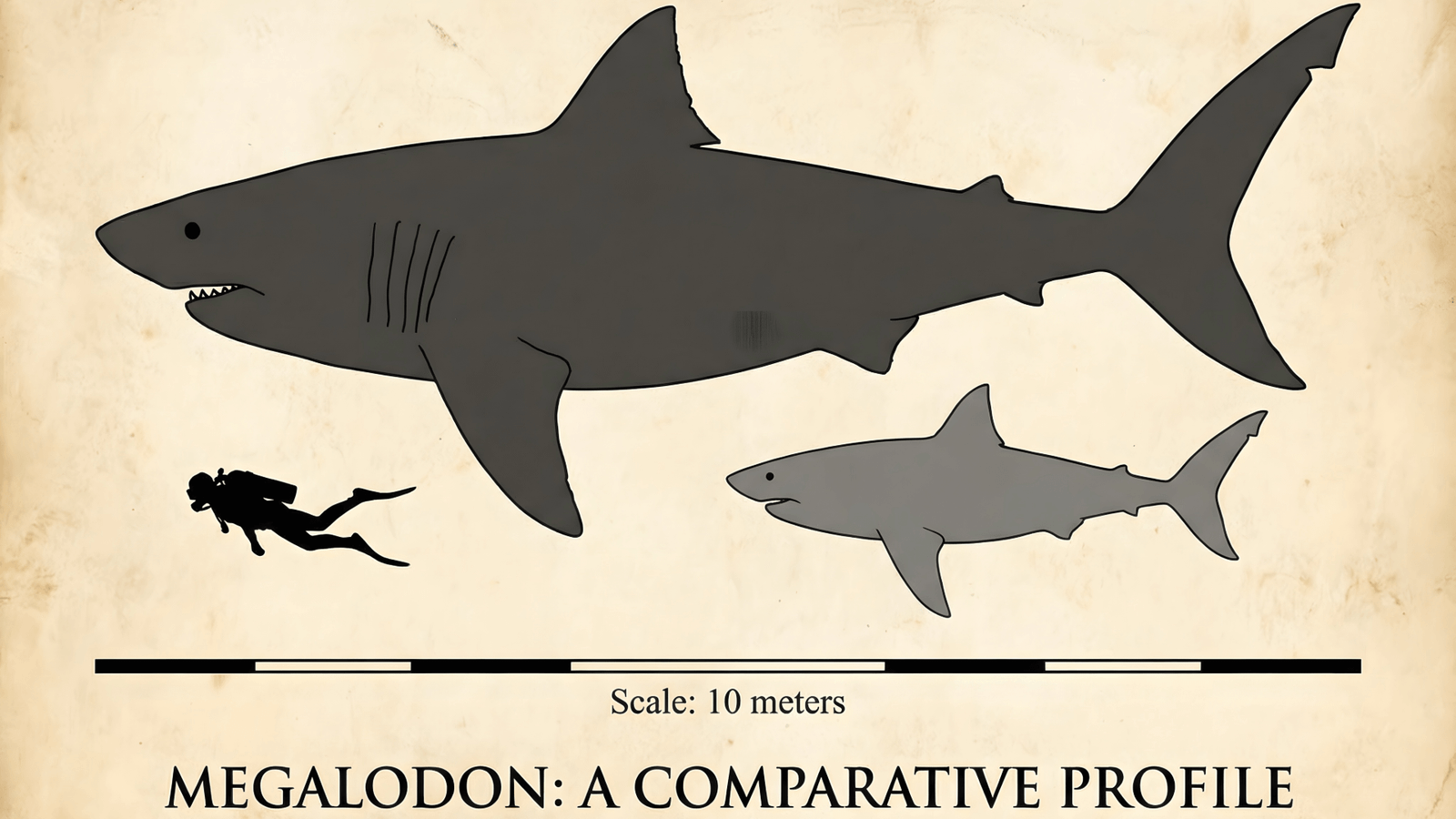
Today’s great white shark looks huge on television, but they would look tiny swimming next to a full-grown megalodon. This extinct hunter was not just the biggest shark in history, it was the largest fish that ever lived.
Scientists studying its fossils found that the largest megalodons grew up to 50 to 58.7 feet (15 to 17.9 meters) long, with female sharks growing much larger and heavier than the males. That makes a giant megalodon about three times longer than the biggest great white sharks swimming in the ocean today.
If a megalodon lay flat on your street, its body would stretch as long as two school buses parked end to end and weigh between 66,000 and 143,000 pounds (30 to 65 metric tons).
2. Its Open Mouth Was Tall Enough for a Grown-Up to Stand Inside
Most sharks have mouths that can only grab a single fish or seal at a time. Because the megalodon hunted giant ocean mammals, it needed jaws that could open like a garage door.
When a megalodon opened its mouth wide to take a bite, its jaws stretched up to 11 feet wide and 9 feet tall (3.4 meters by 2.7 meters). That open mouth was wider and taller than the bedroom doorway in your house.
Even a tall professional basketball player could stand straight up inside a megalodon’s open jaws with extra room above his head, and two grown-ups could easily stand side by side inside it.
3. It Had the Strongest Bite of Any Animal in History
Hunting giant prey in the open ocean takes much more than a big mouth. A megalodon needed super-strong jaw muscles that could snap shut like a giant metal vise without slipping.
Computer models of its jaws show that a megalodon could chomp down with a bite force of up to 41,000 pounds. That single bite was the strongest of any animal ever known to live on Earth, beating the clamping jaws in our powerful crocodile facts and biting up to 10 times harder than a modern great white shark.
Feeling a 41,000-pound bite is like having the full weight of two heavy school buses pressing down on a single spot all at once.
4. One Single Tooth Grew Bigger Than an Adult’s Hand
Your teeth have to last for decades, so you brush them every night to keep them safe. A megalodon bit into hard whale bones every day, so its teeth needed to be giant, thick tools that could be replaced whenever they broke.
A megalodon’s mouth held 276 triangular teeth arranged in multiple rows, and the largest fossil tooth ever found measures 6.9 inches (17.8 centimeters) long. Each tooth had tiny, saw-like notches along its edges to slice through tough meat, and grew nearly three times longer than a modern great white shark’s tooth.
As shared in our guide to amazing dental facts, whenever a shark tooth snapped off, a fresh tooth from the row behind it moved forward like a conveyor belt to take its place.
5. It Ate 2,500 Pounds of Whales and Fish Every Single Day
Pushing a body as heavy as a herd of elephants through the ocean takes a huge amount of fuel. A small snack of little fish could never keep an adult megalodon full for long.
To keep its energy up, a full-grown megalodon had to eat about 2,500 pounds of food every single day. Its favorite meals included ancient whales, dolphins, seals, and giant fish that swam near the coast.
Eating 2,500 pounds of meat a day is like eating the weight of a small family car before bedtime, and scientists have even found fossil whale bones with deep megalodon tooth scratches and broken tooth tips still stuck right inside the bone.
6. Newborn Baby Megalodons Were Already Larger Than a Grown-Up
Many ocean fish lay tiny eggs that hatch into babies no bigger than your fingernail. Megalodons grew in a much safer way so their babies would have a head start in the big ocean.
Instead of laying eggs in the water, mother megalodons gave birth to live baby sharks that were already at least 6.6 feet (2 meters) long from nose to tail. That means a baby megalodon entered the water already built like a big predator.
At 6.6 feet long on its very first birthday, a newborn megalodon pup was already longer than a full-grown adult man or your parents’ mattress.
7. Mothers Hid Their Babies in Warm Shallow Ocean Nurseries
Full-grown adult megalodons had zero predators in the ocean, because nothing was big enough to hunt them. Young megalodon pups were still small enough to get chased by other hungry sharks, such as giant hammerhead sharks.
To keep their babies safe from danger, mother megalodons swam into warm, shallow coastal nursery areas, like the ancient waters off the coast of Panama, to give birth. Those shallow bays were packed with smaller fish and kept big deep-water predators away.
Just like a safe neighborhood playground, these ocean nurseries gave baby megalodons a calm place to practice hunting and grow bigger before swimming out into the deep sea.
8. Its Skeleton Was Made of Bendy Cartilage Like Your Ears
When you visit a natural history museum, you can see full dinosaur skeletons made of heavy leg and rib bones. Yet when you walk over to the shark section, you usually only see a giant open jaw filled with megalodon teeth.
That happens because a megalodon’s skeleton was not made of hard bone at all, it was made of soft, flexible cartilage. When a megalodon died and sank to the ocean floor, its bendy cartilage skeleton broke down and disappeared before it could turn into hard stone.
Gently wiggle the tip of your own nose or the top of your ear with your fingers right now, because that bendy material is the exact same kind of cartilage that held a 50-foot megalodon together.
9. Rings Inside Its Backbone Show It Could Live Over 100 Years
Even though most of a shark’s cartilage skeleton melts away over time, the round pieces of its backbone are a little harder and sometimes turn into fossils. Those rare backbone fossils hold a secret clue about how old a megalodon could get.
When paleontologists look closely at fossilized megalodon backbones, they see circular growth bands that show the shark could live for more than 100 years. Every single band marks one full year of the shark’s life, and wider bands show years when the shark had plenty of food and grew super fast.
Counting the bands on a megalodon backbone works just like counting the rings inside a cut tree trunk in the forest to see how many birthdays the tree had.
10. Built-In Body Heat Helped It Swim Around Six Continents
Most fish in the sea are completely cold-blooded, which means their bodies slow down and get sluggish if they swim into chilly water. A giant hunter that chased fast whales across the globe needed a way to keep its muscles warm and speedy.
Megalodon was partially warm-blooded, meaning its strong swimming muscles generated their own heat and warmed its body from the inside. This built-in body heater let the giant shark stay active in cooler waters as well as warm tropical seas.
Because it could handle so many water temperatures, scientists have dug up fossil megalodon teeth along the coastlines of every continent except the icy world in our Antarctica facts.
11. Megalodons Never Lived at the Same Time as Dinosaurs
Open almost any bin of plastic prehistoric toys, and you will probably see a T. rex and a megalodon sitting right next to each other. That makes lots of kids and parents think megalodons swam in the ocean while dinosaurs walked on the beach, and some movies even pretend the shark is still hiding in the deep sea today.
In real life, megalodons and dinosaurs never met, and the megalodon is 100 percent extinct today. As detailed in our thrilling dinosaur facts, all the non-bird dinosaurs died out 66 million years ago, while the very first megalodons appeared 23 million years ago and finally went extinct 3.6 million years ago.
More than 40 million years separated the last dinosaur from the first megalodon, which means a T. rex lived closer in time to a megalodon than a megalodon lives to you today.
Frequently Asked Questions (FAQs)
1. What does the word megalodon mean?
The word megalodon comes from ancient Greek root words and means “giant tooth”.
2. How big was a megalodon compared to a great white shark?
A full-grown megalodon reached 50 to 58.7 feet (15 to 17.9 meters) in length, making it about three times longer than the largest modern great white sharks.
3. What did the megalodon eat?
Adult megalodons ate about 2,500 pounds of food a day, hunting whales, dolphins, seals, and other large ocean fish.
4. Is the megalodon still alive in the deep ocean today?
No, the megalodon went completely extinct about 3.6 million years ago when ocean temperatures dropped and its favorite whale prey moved to colder polar waters.
5. How big was a baby megalodon when it was born?
A newborn baby megalodon was born live at a length of at least 6.6 feet (2 meters) from nose to tail.
6. How many teeth did a megalodon have?
A megalodon had 276 serrated teeth arranged in rows inside its jaws, and it constantly grew new teeth throughout its life to replace broken ones.
Next time you and your child pass a parked school bus or spot a shark at the aquarium, you can have fun picturing a prehistoric fish with teeth bigger than your hand. Even though this giant hunter vanished millions of years ago, the fossil teeth it left behind still give kids an amazing mystery to explore.
That was it, folks! Hope you and your little one enjoyed these amazing facts about the megalodon.