11 Amazing Crocodile Facts for Kids [UPDATED]
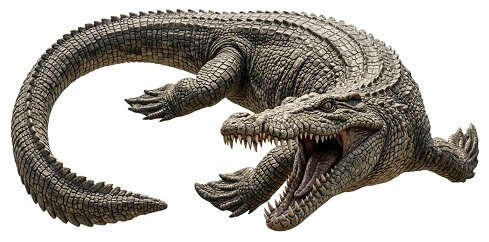 Two bumpy eyes poke just above the quiet river water, looking just like a floating tree log. Your kid leans closer to the zoo glass, and suddenly that floating log opens a giant mouth full of sharp teeth!
Crocodiles look like tough prehistoric monsters on the outside, yet they are remarkably attentive parents that gently carry their tiny babies inside their powerful jaws. Here are the coolest scientifically verified facts about these armored swamp masters that you can share with your young explorer today.
11 Interesting & Fun Crocodile Facts for Kids They Will Love to Know about
Crocodiles belong to a remarkable group of scaly vertebrates called reptiles, sharing ancient evolutionary ties with animals explored in our fascinating turtle facts. Even though they spend hours basking motionless in the river mud, their bodies are precision-engineered machines packed with clever adaptations for hunting on land and deep underwater.
From storing months of food energy in their thick tails to chirping to their mothers before they even hatch from their leathery eggs, crocodiles are packed with evolutionary wonders.
Now let us dive in and explore these incredible crocodile facts!
1. Big Crocodiles Can Go Up to Two Years Without Eating
When you miss an afternoon snack, your tummy begins rumbling right away. Crocodiles do not need to eat three meals a day because their bodies possess one of the most efficient metabolic systems on the planet.
Crocodiles are ectothermic (often called cold-blooded) animals. Unlike mammals, they do not burn vast amounts of calories just to keep their bodies warm. Instead, their bodies store surplus food energy as dense lipid fat inside their long, muscular tails.
During harsh droughts or food shortages, a crocodile can slow its heart rate to just two or three beats per minute and enter a dormant resting state called estivation. Supported by this slow-burning tail fat, a massive adult crocodile can easily survive over a year, and in extreme dry seasons up to two full years, without swallowing a single meal!
2. Saltwater Crocodiles Are the Largest Living Reptiles on Earth
Most reptiles you spot in your neighborhood garden or city park are small creatures that easily fit inside a shoebox. Crocodiles, however, rule the reptile world as the largest, heaviest living reptiles on our planet, far outpacing even the mighty Komodo dragons.
While smaller species like the African dwarf crocodile reach an average length of 5 feet (1.5 meters), the colossal saltwater crocodile (Crocodylus porosus) is a true giant. Adult male saltwater crocodiles average 14 to 17 feet (4.3 to 5.2 meters), with record-verified giants measuring over 20 feet (6.1 meters) long!
These enormous reptiles can tip the scales at 2,000 to 2,200 pounds (900 to 1,000 kilograms) or more. That means an adult saltwater crocodile is longer than a full-grown giraffe is tall and weighs as much as an entire compact family car!
3. A Special Throat Valve Seals Water Out While They Hunt
Think about how you use your flexible tongue to lick an ice cream cone or move food around your mouth while chewing. A crocodile cannot stick its tongue out at all because a sturdy membrane anchors it firmly to the floor of its mouth.
Even more amazingly, crocodiles possess a unique biological trapdoor called a palatal valve (or gular flap) at the back of their throat. When a crocodile dives underwater to catch fish or grab prey, this fleshy valve seals shut completely.
This built-in seal prevents river water from rushing into its throat and lungs, allowing a crocodile to open its jaws wide and catch food underwater without drowning!
4. Mother Crocodiles Use Super-Sensitive Jaws to Cradle Their Babies
Crocodiles have the strongest crushing bite ever measured in the animal kingdom, capable of exerting over 3,700 pounds of pressure per square inch. That makes a crocodile’s mouth look like the most dangerous place a tiny baby could ever go. Yet mother crocodiles are famously tender caregivers.
A mother crocodile builds a protective nest of river mud and vegetation, laying between 20 and 60 hard-shelled eggs. She guards her nest day and night for 65 to 90 days. When the tiny 8-inch (20-centimeter) hatchlings chirp to signal they are ready, she carefully uncovers the nest and uses her jaws like a mobile safety carriage.
Her jaws are covered with thousands of microscopic sensory domes called integumentary sensory organs (ISOs). These receptors are even more sensitive than human fingertips! This allows her to gently scoop up to a dozen fragile hatchlings into her mouth and transport them safely to nursery water pools without leaving a single scratch.
5. They Rest with Their Mouths Wide Open to Cool Down
When you see a crocodile lying motionless along a sunny sandbank with its jaws gaping wide open, it might look like it is getting ready to snap at an unsuspecting visitor. In reality, the crocodile is practicing a natural cooling technique called mouth gaping.
Because crocodiles are ectotherms, they bask under the morning sun so their thick armored scales can absorb solar warmth. Once their bodies reach their ideal temperature, they need to avoid overheating. Unlike humans, crocodiles do not have sweat glands.
By resting with its mouth wide open, moisture evaporates from the soft, damp tissues inside its mouth. This evaporative cooling chills the blood vessels traveling to its brain, functioning just like a pet dog panting on a hot summer afternoon!
6. They Grow Thousands of Replacement Teeth Throughout Their Lives
When human children lose their baby teeth, only one permanent adult set grows in to replace them, as highlighted in our guide to amazing dental facts for kids. If a crocodile breaks or dulls a tooth on bone or tough prey, it never has to worry about missing teeth.
Crocodiles are polyphyodonts, meaning their bodies produce an endless conveyor belt of brand-new teeth. Inside each crocodile’s jaws sit 60 to 68 sharp, cone-shaped teeth anchored deep within bony sockets.
Directly beneath every working tooth sits a small backup tooth bud and specialized stem cells. As soon as an old tooth wears out, the new tooth grows upward and pushes the old one out of the socket. Over a single lifetime, a single crocodile can cycle through 2,000 to 4,000 teeth!
7. Baby Crocodiles Squeak to Their Mothers from Inside the Egg
While many reptiles are almost completely silent throughout their lives, crocodilians are the most vocal non-avian reptiles on Earth. Their conversations begin before they are even born!
About a day or two before hatching, baby crocodiles inside their shells produce high-pitched squeaking and grunting noises. Biologists discovered that these prenatal sounds coordinate the entire nest so all siblings hatch at the exact same time, while also alerting mother crocodile to dig away the sand and free them.
Adult crocodiles communicate with a rich vocabulary of hisses, deep barks, and vibrating roars. During mating season, male crocodiles make low-frequency infrasound rumbles so powerful that water droplets dance and spray right above their backs like miniature fountains!
8. Some Crocodiles Dig Massive 40-Foot Underground Burrows
Crocodiles inhabit tropical wetlands, swamps, and rivers across Africa, Asia, Australia, and the Americas. When seasonal weather turns punishingly dry or unexpectedly cold, species like Nile crocodiles and Mugger crocodiles become master excavators.
Using their sturdy clawed feet and muscular tails, these crocodiles dig long underground tunnels called burrows directly into muddy riverbanks. These burrows can stretch up to 30 to 40 feet (9 to 12 meters) deep, ending in an underground living chamber.
Inside these subterranean sanctuaries, humidity stays high and temperatures remain perfectly stable. Crocodiles rest safely tucked away underground for months at a time until rainy seasons refill their rivers.
9. Crocodiles Are Smart Enough to Play and Use Tools
People used to assume reptiles were simple creatures operating only on basic instinct, but animal behavior scientists have proved crocodiles are remarkably intelligent and curious.
Research conducted by wildlife biologists has documented crocodiles engaging in regular play behavior. They ride waves like ocean surfers, slide repeatedly down muddy banks for fun, and play with floating river debris and pink flowers.
Even more impressive, crocodiles are confirmed tool users! In India and the United States, mugger crocodiles and alligators gather floating twigs and balance them carefully across their snouts during bird nesting season. When wading birds fly down looking for sticks to build nests, the clever predator snaps its jaws shut!
10. Crocodiles Cry Tears, But They Excrete Salt Through Their Tongues
You might have heard someone talk about “crocodile tears” to describe insincere sorrow. This historic phrase came from ancient legends claiming that crocodiles weep sorrowful tears while eating their prey.
Crocodiles really do shed tears from their eyes, but not because they feel guilty or sad! When a crocodile spends hours out of water feeding or basking, its eyes produce clear lubricating tears to clean and protect its nictitating membrane (a clear, protective third eyelid that acts like built-in swim goggles).
Furthermore, while popular folklore says crying washes away ocean salt, true crocodiles actually pump out excess seawater salt through specialized lingual salt glands located on their tongues, not through their tear ducts!
11. Crocodiles Are Closely Related to Birds and Survived the Dinosaurs
A crocodile’s armored body might remind you of ancient prehistoric monsters, and for good reason! Alongside the famous giants in our thrilling dinosaur facts, the ancestors of crocodilians shared the prehistoric landscape over 200 million years ago during the Mesozoic Era.
Crocodiles and dinosaurs both evolved within an elite group of ancient reptiles known as archosaurs (meaning “ruling reptiles”). When a catastrophic asteroid wiped out the non-avian dinosaurs 66 million years ago, ancient crocodile relatives survived.
Because of this shared evolutionary family tree, crocodiles are the closest living relatives of modern birds, including swift peregrine falcons! In fact, crocodiles share key anatomical traits with birds that lizards do not have, including a sophisticated four-chambered heart, unidirectional lung breathing, and attentive parenting instincts.
Frequently Asked Questions (FAQs)
How can you tell a crocodile apart from an alligator?
You can distinguish a crocodile from an alligator by looking at snout shape and tooth placement. Crocodiles have narrower, V-shaped snouts, and their large fourth lower tooth remains visible on the outside when their jaws close shut. Alligators have wider, rounded U-shaped snouts with upper jaws that overlap and conceal their lower teeth. Furthermore, true crocodiles possess active salt glands on their tongues, allowing them to thrive in salty coastal waters.
What do crocodiles eat?
Crocodiles are opportunistic carnivorous apex predators. Young hatchlings feed on water insects, small crabs, and tiny fish. As crocodiles grow larger, their diet expands to include fish, turtles, wading birds, frogs, and large land mammals such as zebras, deer, and wild boar that approach the riverbank to drink.
What is a baby crocodile called?
A baby crocodile is called a hatchling. When they emerge from their hard-shelled eggs, hatchlings measure roughly 7 to 12 inches (18 to 30 centimeters) long and stay close to their protective mother in nursery groups called crèches.
How fast can a crocodile move?
In water, a crocodile can swim at speeds of 15 to 18 miles per hour (24 to 29 kilometers per hour) using its muscular, paddle-like tail. On land, crocodiles usually move in a slow walk of 2 to 4 miles per hour, but they can execute sudden lunges or short sprints reaching 9 to 11 miles per hour (14 to 18 kilometers per hour). Certain agile species, like the Cuban crocodile, can even gallop in brief bursts up to 11 to 15 miles per hour!
How long do crocodiles live?
In the wild, most true crocodile species live between 50 and 70 years. Very large species like the saltwater crocodile and Nile crocodile can live past 70 to 80 years, with some record-holding captive crocodiles living beyond 100 years.
Can crocodiles live in salt water?
Yes! Species such as the saltwater crocodile (Crocodylus porosus) and American crocodile (Crocodylus acutus) regularly travel across coastal oceans, mangrove swamps, and river estuaries because functioning salt glands on their tongues pump excess sodium and chloride out of their bodies.
Next time you and your child spot a crocodile resting like a bumpy log at the zoo, ask them why its mouth is wide open or see if you can spot its big fourth bottom tooth poking out. You will have so much fun sharing how these ancient archosaurs use tender jaws, smart hunting tricks, and ancient adaptations every single day!
That was it, folks! Hope you and your little one enjoyed these amazing facts about crocodiles.